

The Valnerina
The villages, honestly ranked
Nine villages of the lower Valnerina, ranked the way we’d rank them for a friend with limited time. The grades are simple: worth a detour (build your day around it), worth an hour (stop if you’re passing), for completists (lovely, but only if you’ve done the rest).
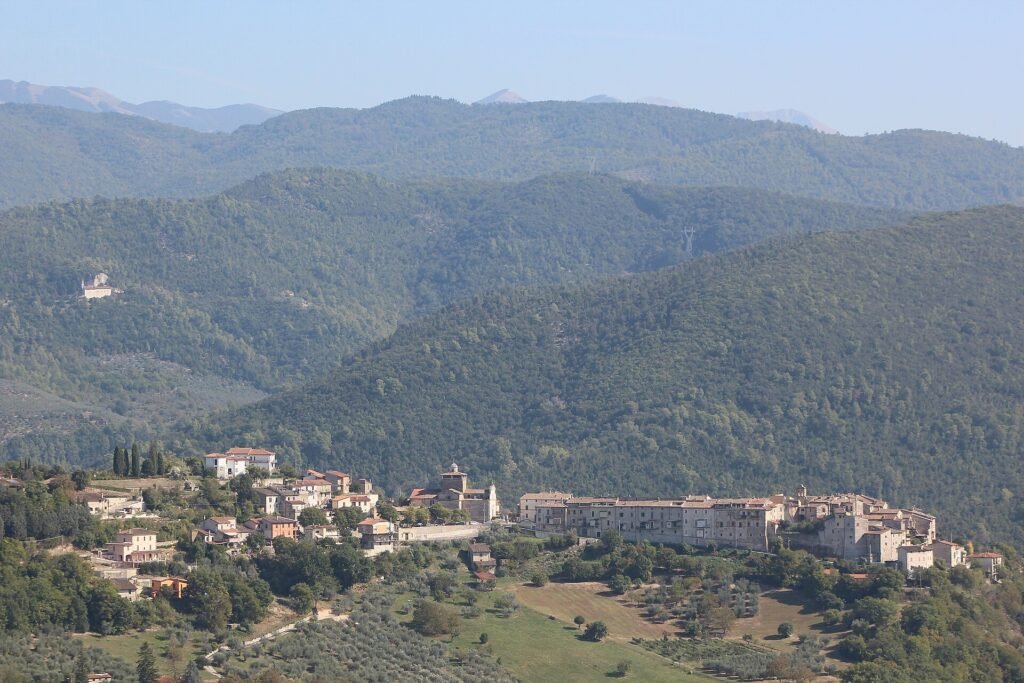
Photo: Ziegler175, Wikimedia Commons, CC BY-SA 3.0
Facts checked: October 2026. We’ve walked every one of these – the verdicts are ours and they’re honest, including about our own village.
Worth a detour
- Ferentillo – two villages glaring at each other across the river, each under its own ruined fortress, plus the mummies, 400 climbing routes and the valley’s best restaurant. The most complete stop in the valley.
- Arrone – a certified Borghi più Belli d’Italia member and the valley’s living, working hub: Thursday market, the tower with an olive tree growing out of it, and the breakfast bar the whole valley uses.
- Vallo di Nera – the best-preserved castrum in the Valnerina, a pedestrian spiral of stone with two seriously frescoed churches and almost nobody in it. Furthest away (35 min), most rewarding per minute.

According to tradition, Ferentillo’s name means “little Ferento”, after the ancient town whose settlers are said to have founded it in the 8th century (Wikipedia).
Worth an hour
- Collestatte – our village: the hilltop castrum directly above the falls. We’re biased and we’ve marked our bias; the lanes and the gorge views hold up regardless.
- Torre Orsina – the prettiest village silhouette on this stretch of the Nera, an elliptical knot of arches, with horse riding from the edge of the village.
- Scheggino – a micro-borgo threaded with canals, the free Urbani truffle museum, and the adventure park next door for families.
For completists
- Casteldilago – a handful of lanes on a rock spur, redeemed entirely by its osteria.
- Montefranco – the “free terrace” of the Valnerina: come on a clear evening for the views, not for sights.
- Polino – the smallest comune in the province, up its mountain: a Rocca, big air, and the old Papal border walk.
How to string them together
The natural circuit follows the valley road: Collestatte/Torre Orsina → Arrone (coffee) → Casteldilago (glance up) → Montefranco (if it’s clear) → Ferentillo (the main event) → abbey → Scheggino → Vallo di Nera if you’ve the legs. That’s a full day with lunch at one of the valley tables.
The valley road you are following was once a tramline. From the early 1900s until 1960 the Terni–Ferentillo tramway ran up the valley through Collestatte, Torre Orsina, Montefranco and Arrone (Wikipedia; Wikipedia).