
The Valnerina
The Valnerina – Umbria’s wild valley
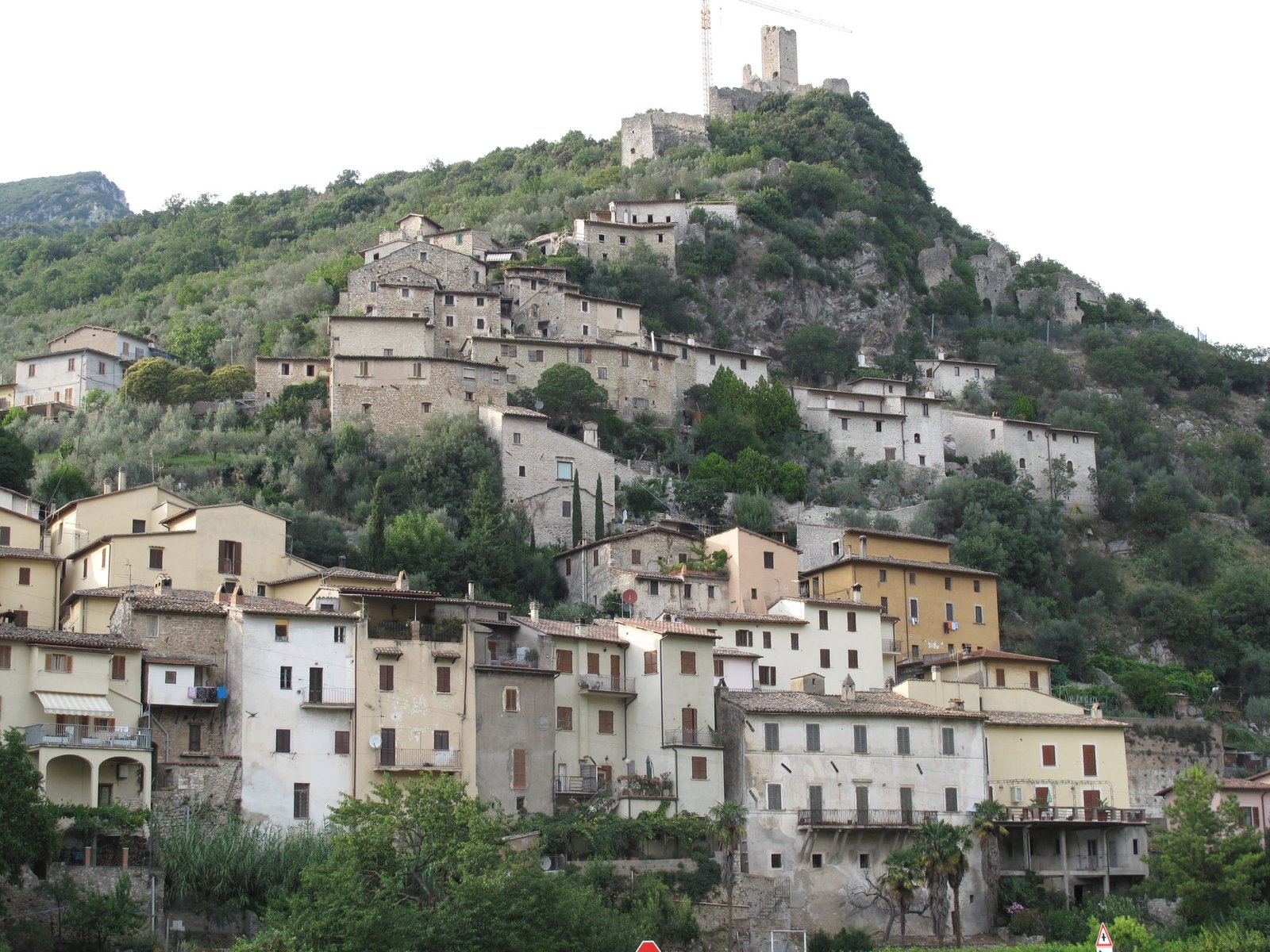
The Valnerina is the valley of the River Nera – a green gorge that winds north from Marmore Falls through stone villages that tourism largely forgot to ruin. It’s Italy’s black-truffle heartland, Umbria’s sport-climbing capital, home to a crypt full of natural mummies and a Lombard abbey with one of central Italy’s great fresco cycles – and most falls visitors drive away without ever turning up it. This page is the argument for turning up it.
Facts checked: July 2026 · We live in it – Collestatte, the valley’s southern gateway, is our village.
Orientation in one paragraph
The valley road – everyone still calls it the SS209 – leaves Terni past the falls and follows the Nera upstream. First come our villages: Collestatte and Torre Orsina above the falls, then Arrone (the valley’s everyday hub, and a certified Borghi più Belli village), Casteldilago on its rock, Montefranco on its balcony, and Ferentillo under its twin fortresses. Beyond Ferentillo the valley deepens past the abbey of San Pietro in Valle to Scheggino and, up a side turn, Vallo di Nera – the best-preserved castrum in the valley. Everything named so far is within 35 minutes of the falls.
Why it’s different from postcard Umbria
Assisi and the Perugia hill towns are Umbria’s drawing rooms; the Valnerina is its working kitchen. The villages here guarded a river, milled its water and hunted its woods – and they still feel like that: bars full of locals, one serious restaurant per village, festivals that exist for the residents rather than the coaches. The national tourism research institute has called the valley a laboratory for reviving Italy’s inner areas – which is a bureaucrat’s way of saying it’s authentic and quietly coming back to life.
The five reasons to spend a day (or three)
- Truffles. This is serious black-truffle country – the Urbani family, the world’s biggest truffle house, is from Scheggino, where their free museum sits on the village square, and at Ferentillo the Piermarini family will take you hunting with their dogs before lunch. The full picture: truffle country.
- The mummies. In the crypt at Ferentillo, the soil mummified the dead naturally – two dozen of them, on display in Italy’s strangest small museum: the story.
- The abbey. San Pietro in Valle, founded by a Lombard duke in the 8th century, holds a Romanesque fresco cycle that art historians treat as a stepping stone towards Giotto: visiting it.
- The outdoors. A flat riverside cycle route runs the length of the lower valley (official GPX and all – route guide), Ferentillo’s crags carry 400+ climbing routes, and the rafting operators launch from both ends.
- The villages themselves – profiled honestly, with verdicts, in the villages guide.
A first Valnerina day (from the falls)
Morning e-bike or river float; late-morning coffee and cornetti at Bar All’Isola outside Arrone; the mummies at Ferentillo (20 macabre minutes); the abbey after lunch – and lunch is Piermarini if you’ve booked, the Grottino del Nera if you haven’t; then back down the valley for the falls’ afternoon release. That day is the core of our three-day itinerary.
Stay with us
The villa, above the falls
Palazzetto Manassei — our Art Nouveau villa on the Collestatte piazza. Three bedrooms, a terrace over the gorge, and Marmore Falls a ten-minute walk downhill.
Frequently asked questions
What is the Valnerina?
The valley of the River Nera in south-east Umbria, running from Marmore Falls up towards the Sibillini mountains – a corridor of medieval villages, truffle woods and river sports, with the lower stretch (the part in this guide) all within 35 minutes of the falls.
Do you need a car?
Yes. The valley bus serves commuters, not sightseers. The one car-free exception is the riverside cycle route – e-bikes turn the whole lower valley into a day ride.
Is one day enough?
One day covers the greatest hits (mummies, abbey, truffle lunch, a village or two). The valley rewards a second day more than anywhere else within reach of the falls.