

Hidden Gems
The quiet list
“Hidden Umbria” listicles usually recycle the same ten places nobody writing them has visited. This one is different: every entry is somewhere we’ve been, with one honest line about why it stays quiet. It’s deliberately short and will grow as we cover more – we’d rather list eight true things than fifteen borrowed ones.
Facts checked: October 2026. This is our quiet list – the places we send guests to when they want the valley without the visitors. We only list somewhere once we’ve actually stood there, so it grows slowly and on purpose.
Each of these has its own page or lives inside a deeper guide – this hub is the curated index.
The echo of Monte Caperno
A spot above Lake Piediluco where the mountain repeats a full eleven-syllable sentence back to you. Strange, well documented, and genuinely worth the short walk. The mountain that answers back →
The statue of the Madonna dell’Eco was placed on the summit of Monte Caperno in 1911 to watch over the lake and the village. The mountain itself is known locally as the mountain of the echo, for the echo it gives back (Comune di Terni).

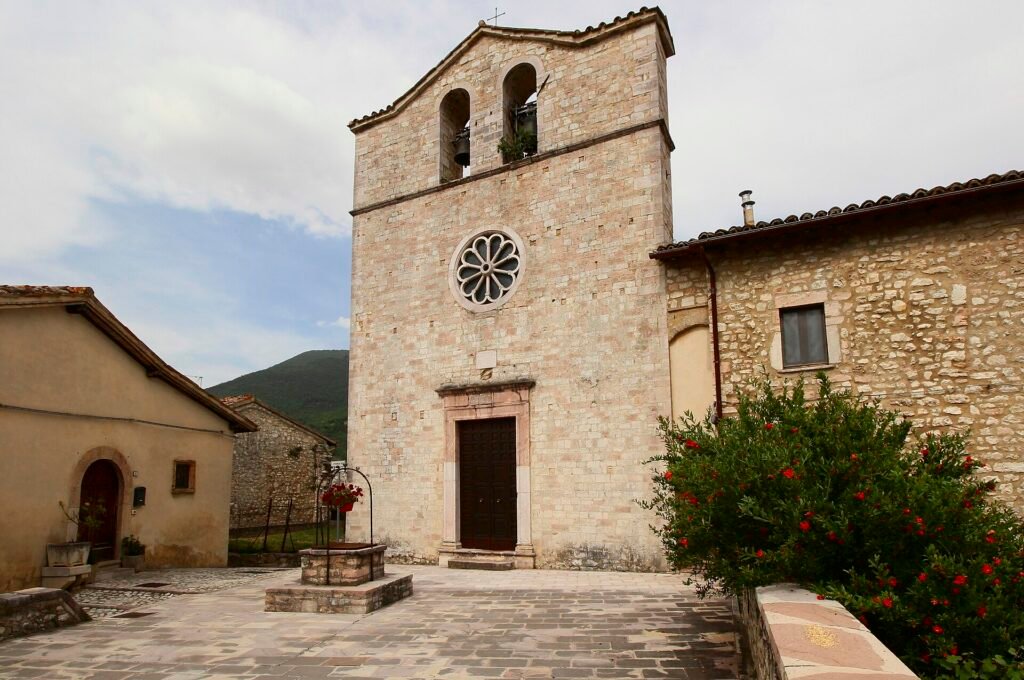
Vallo di Nera
One of the officially “most beautiful villages in Italy” – a perfect spiral of a borgo up the valley, and rarely busy. Vallo di Nera →
Polino and the old Papal border
The smallest comune in Terni province, with a short mountain walk to the former frontier of the Papal States – customs ruins and brigand stories. Polino → · the border walk →
The border ruins are the old customs house between the Papal State and the Bourbon kingdom, where you can still pick out the guardroom and the cells for prisoners in transit (FAI).

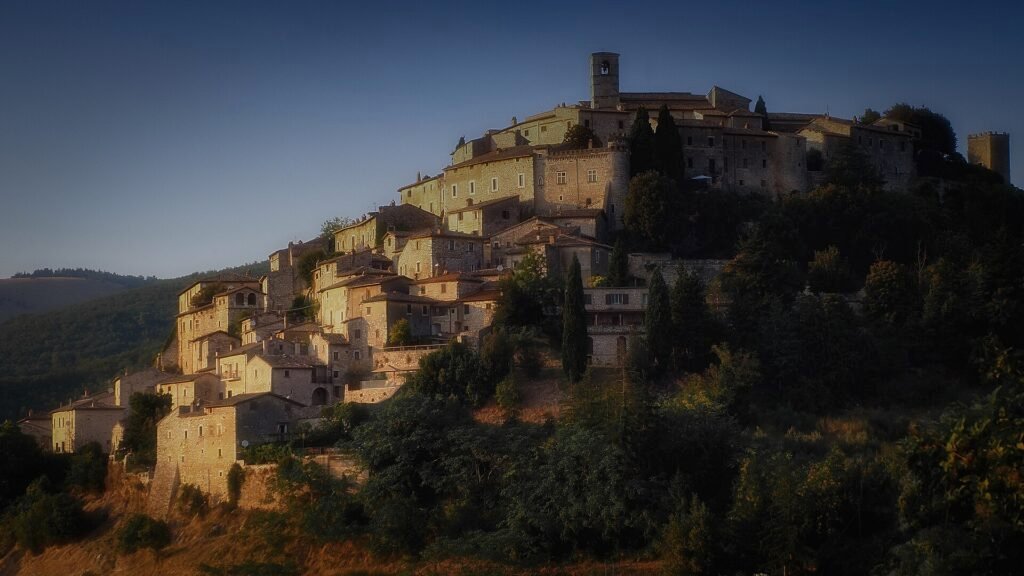
Labro at sunset
A tiny, almost perfectly restored stone village on the hill above Lake Piediluco (just over the regional line into Lazio), best in the last hour of light. Labro →
The Ferentillo mummies
A crypt of naturally mummified bodies under a village church – macabre, real, and very much off the standard circuit. The mummies →

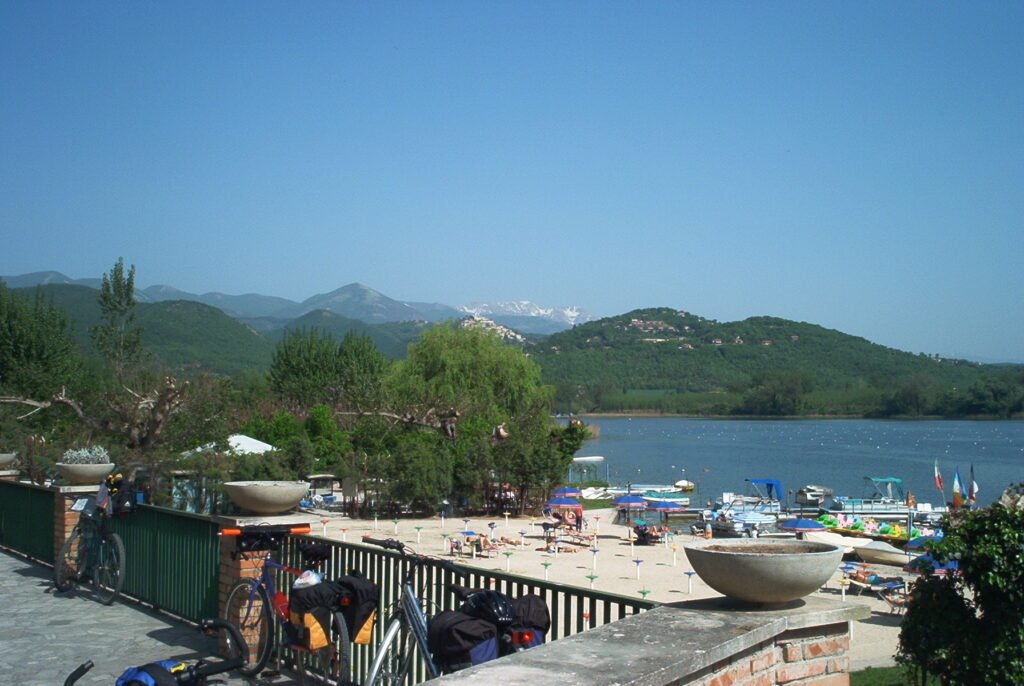
Where you can actually swim
Not the falls (forbidden) – the honest local answer to “where do we cool off?” The swimming question, answered →
More, as we earn them
A quiet spring-fed lake near Labro (Lago di Ventina), the temple mountain above Cesi (Monte Torre Maggiore), and others we’re still getting to know properly. Places we’ve heard are wonderful but haven’t yet visited – Rasiglia’s springs among them – won’t appear here until we’ve been. That’s the whole promise of the list.
When “hidden” stops being hidden
Honesty cuts both ways: a few of these do get busy at peak moments – Vallo di Nera on a festival weekend, Labro at August sunset. If solitude is the point, come midweek and outside mid-August. Our honest crowd calendar →
Frequently asked questions
What are the best hidden gems near Marmore Falls?
Our quiet list runs from the echo of Monte Caperno above Lake Piediluco to the spiral borgo of Vallo di Nera (one of Italy’s officially “most beautiful villages”), Polino and its walk to the old Papal-States border, Labro at sunset, and the Ferentillo mummies. Each place only goes on the list once we’ve actually stood there.
Where can you actually swim near Marmore Falls?
Not at the falls, and not in the river on your own: the safe answer is Lake Piediluco’s authorised bathing points, or a guided rafting trip on the Nera. See where you can actually swim.
Is Vallo di Nera worth visiting?
Yes — it is one of Italy’s officially “most beautiful villages”, a perfect spiral of a borgo up the valley, and rarely busy.
What is the echo of Monte Caperno?
A spot above Lake Piediluco where the mountain repeats a full eleven-syllable sentence back to you — well documented, a little strange, and worth the short walk.
What can you see in Polino?
Polino is the smallest comune in Terni province, with a short mountain walk to the former frontier of the Papal States — customs ruins and brigand stories along the way.
Southern Umbria Hidden Gems
A printable map of the corners of the Valnerina most visitors walk straight past — ghost hamlets, an abbey in the woods, and more.
- 14 hand-picked spots with a numbered map
- How to string them into a day
- The quiet places locals love