
Umbria
The best places to visit in Umbria
The famous hill towns, honestly weighed, and the lakes, gorges and small towns that are better than their fame. Written from the south of the region, where we live.
Photo: Marcobranchi, Wikimedia Commons, CC BY-SA 4.0
Facts checked: October 2026. Festival dates and opening times change every year, so check the linked sources before you travel.
Umbria is small enough to drive across in two hours and dense enough to fill a month. The trouble with most “best places to visit in Umbria” lists is that they stop at Assisi and Perugia and treat the rest as an afterthought. We live in the south of the region, by the Marmore Falls, so this list is written from the other end: the famous names, honestly weighed, and the places that are better than their fame.
Umbria at a glance
How Umbria fits together
It helps to think of the region in four parts. The north is Perugia, Assisi, Gubbio and Lake Trasimeno: the classic first-trip circuit. The centre is the Spoleto valley and the small hill towns around it, Spello, Montefalco, Bevagna and Trevi, with Todi a little to the west. The east is mountain country: Norcia, the Monti Sibillini and the high plain of Castelluccio. And the south, where we are, is the green, wetter Umbria of the Nera river: the Marmore Falls, Lake Piediluco, the Valnerina gorge and the towns of Narni and Terni, with Orvieto on its rock to the west. Most visitors see one part and assume it’s all of it.
The big names, and whether they’re worth it
Assisi
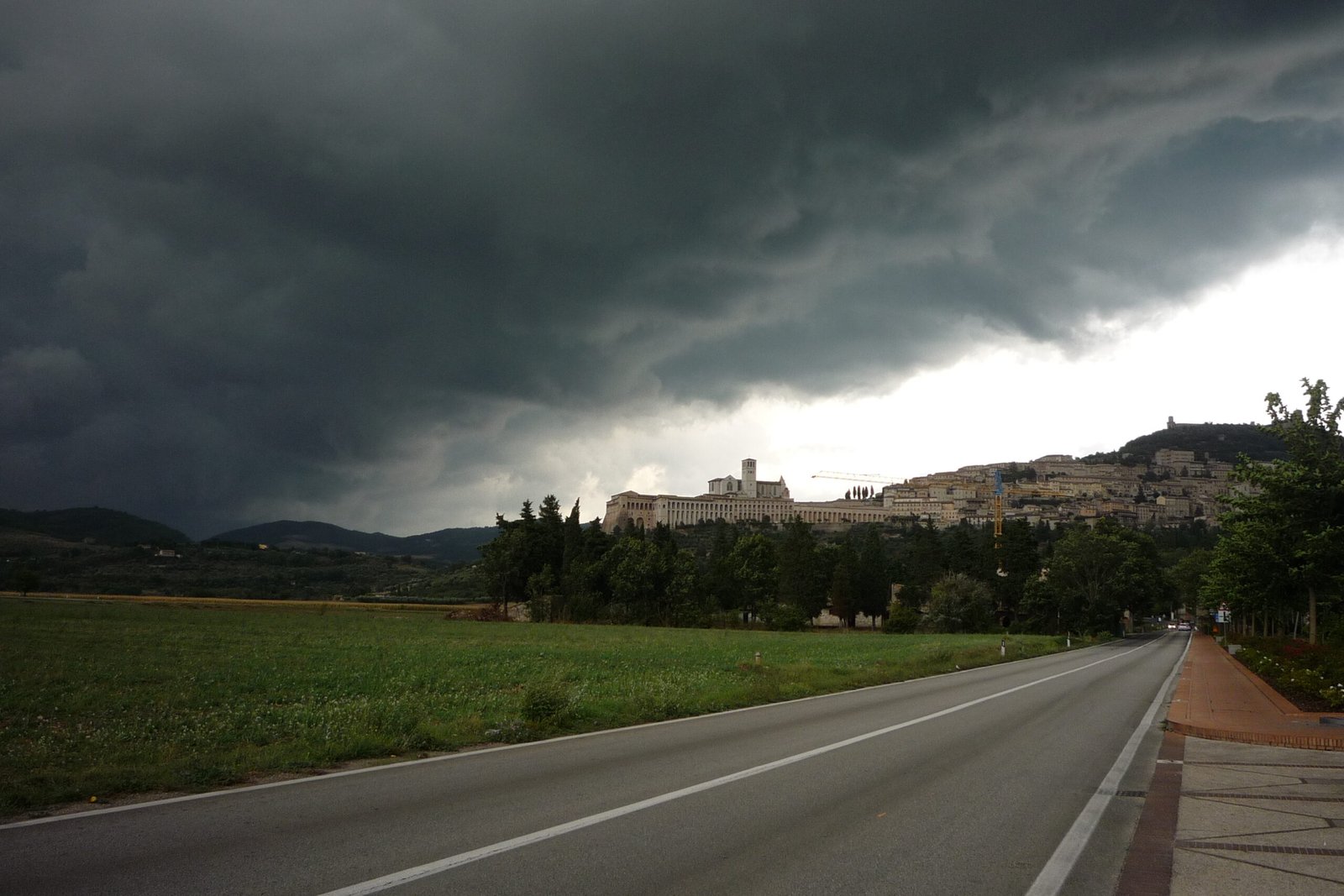
The town of St Francis is a UNESCO World Heritage Site in its own right, listed in 2000 as “Assisi, the Basilica of San Francesco and Other Franciscan Sites” (UNESCO). The listing covers the two-level Basilica of San Francesco, Santa Chiara at the other end of the medieval centre, the Rocca Maggiore above, and sanctuaries out in the valley including Santa Maria degli Angeli. Yes, it’s busy. The fix is timing: arrive before the coaches, see the Upper and Lower Basilica first, and walk up through the lanes when the groups are having lunch.
Perugia
The regional capital is a university city on a hill, and it feels lived-in in a way the smaller towns sometimes don’t. The heart of it is Piazza IV Novembre and the Fontana Maggiore, completed in 1278 with sculpture by Nicola and Giovanni Pisano (Key to Umbria). Come for the National Gallery of Umbria, stay for an evening walk along Corso Vannucci, and know that parking in the centre is a puzzle best solved with the minimetro or the escalators up through the Rocca Paolina.
Orvieto
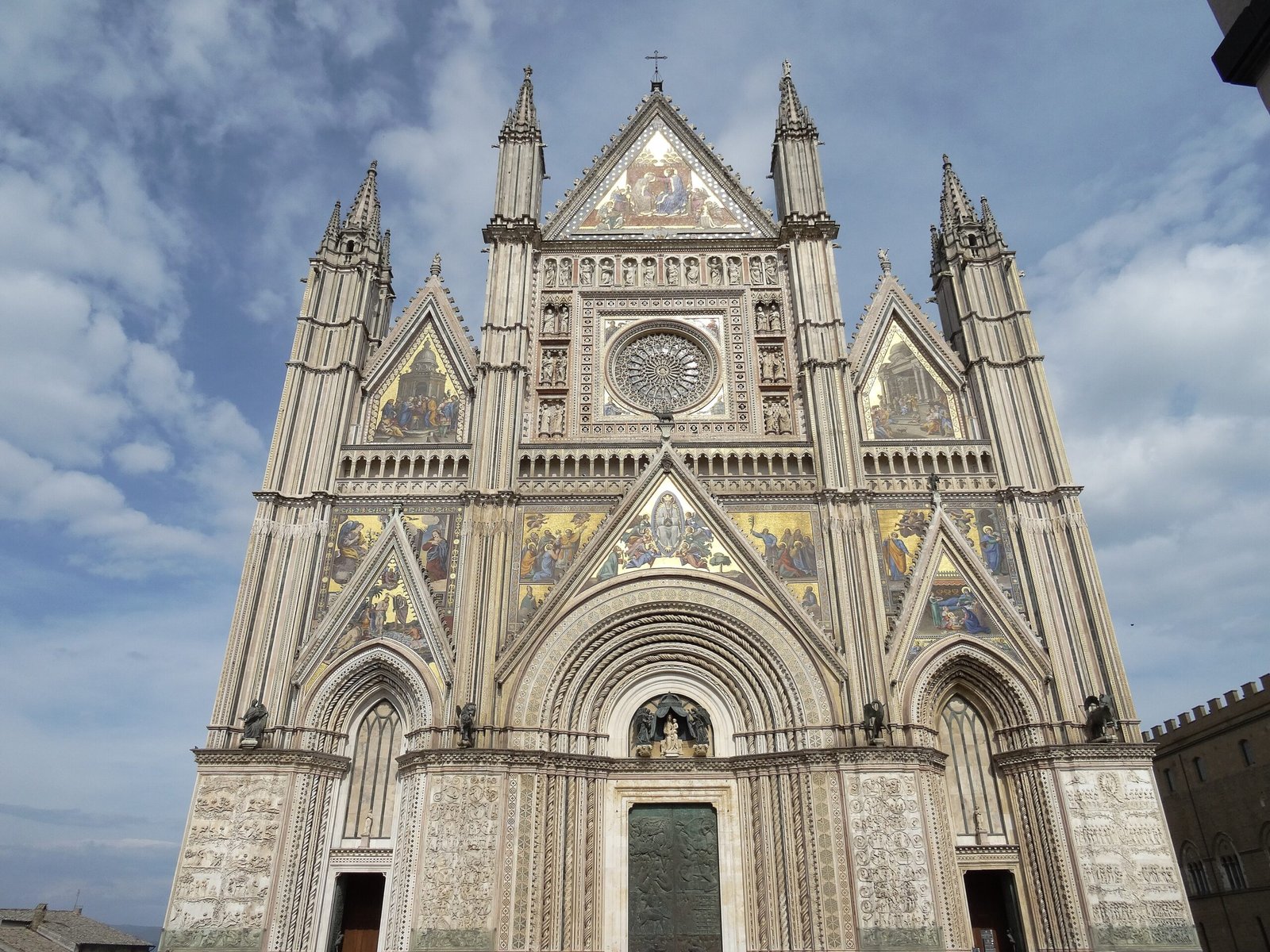
Orvieto sits at the western edge of our own province of Terni, and it’s the most dramatic arrival in the region: a town sitting on a sheer block of volcanic tufa. The cathedral’s golden façade stops people in the street, and inside, the San Brizio chapel holds one of the great Renaissance fresco cycles, begun by Fra Angelico and finished by Luca Signorelli from 1499. Then there’s the Pozzo di San Patrizio, a well commissioned by Pope Clement VII to keep the city supplied during a siege: 54 metres deep, with two spiral staircases of 248 steps each that wind around each other without meeting (Italia.it). Underneath the whole town is a maze of Etruscan caves and tunnels you can visit with a guide.
Spoleto

Our favourite of the big towns, and the nearest of them to us. Spoleto has the Ponte delle Torri striding across a gorge, a cathedral with Filippo Lippi’s last frescoes, and the early medieval church of San Salvatore, one of the Umbrian pieces of the UNESCO “Longobards in Italy” listing of 2011, along with the little temple at the springs of the Clitunno (UNESCO). Every summer since Gian Carlo Menotti founded it in 1958, the Festival dei Due Mondi fills the town with music, theatre and dance in late June and July (Festival di Spoleto). In July 2026 its Teatro Nuovo Gian Carlo Menotti joined the UNESCO list in a group of ten historic “condominium theatres” across central Italy, the other nine in Marche and Emilia-Romagna (La Nazione). Our full Spoleto guide has the practicalities.
Gubbio
Grey stone, steep streets and the Palazzo dei Consoli standing over the town like a fortress. Gubbio is at its most extraordinary on 15 May, when the Festa dei Ceri sends three huge wooden “candles” racing through the streets and up the mountain to the basilica of Sant’Ubaldo (Italia.it). The rest of the year, ride the open cage lift up Monte Ingino for the view. It’s the furthest of the main towns from the south of the region, so it’s best done from a base in the north.
The smaller towns that repay the drive
- Todi – one of the finest medieval squares in Italy, Piazza del Popolo, and a Renaissance church, Santa Maria della Consolazione, standing alone below the walls. Fewer coaches than Assisi or Orvieto.
- Spello – a honey-coloured town of steep lanes and window boxes. On the weekend of Corpus Domini its streets are carpeted with flower pictures for the Infiorate, a tradition going back at least to 1602 (details).
- Montefalco – the “balcony of Umbria”, known for Sagrantino, the region’s most serious red wine, and for Benozzo Gozzoli’s frescoes in the former church of San Francesco.
- Bevagna – flat, Roman and unhurried. In June the Mercato delle Gaite turns the town back to the Middle Ages, with working medieval crafts in each of its four quarters (Touring Club).
- Narni – the town that gave C.S. Lewis the name Narnia, with an underground tour that’s one of the best things in the region. See our Narni guide and the room-by-room Narni Sotterranea guide.
- Norcia – famous for cured pork and black truffles, and the gateway to the Sibillini. It’s still rebuilding after the 2016 earthquakes, and visiting is one of the most useful things you can do for it.
The landscapes
Marmore Falls
Two thousand years old and engineered by the Romans, the Cascata delle Marmore drops 165 metres in three leaps, and the water is turned on and off to a timetable because the river also feeds a hydroelectric plant. It’s the one thing in Umbria that genuinely needs planning: our complete Marmore Falls guide and the water release times will save you a wasted trip.
Castelluccio and the Monti Sibillini
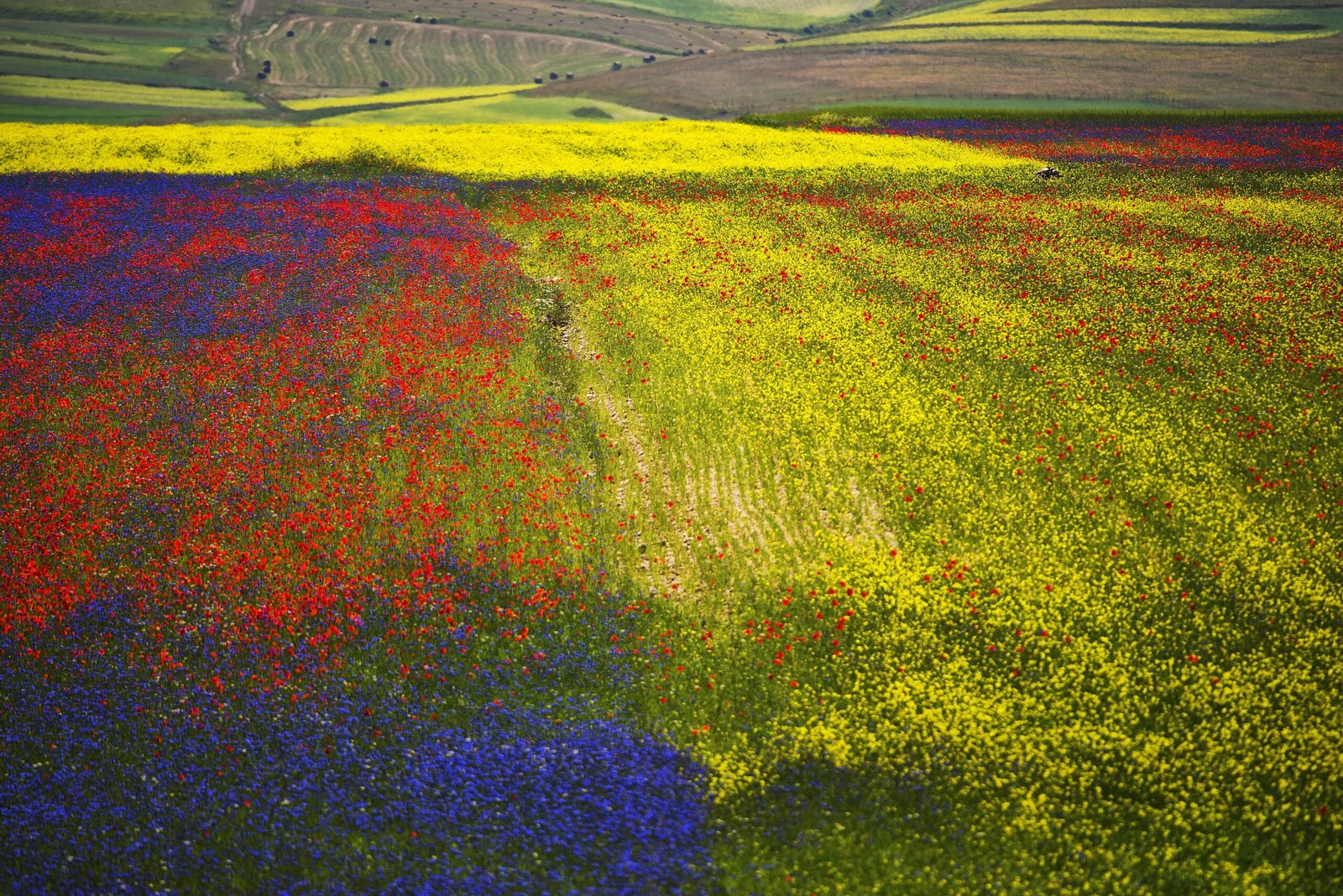
Every year, usually from late May to mid-July depending on the weather, the high plain of the Pian Grande below Castelluccio di Norcia turns into a patchwork of red poppies, yellow mustard, blue and white wild flowers and the flowering lentils the plain is famous for (SiViaggia). On the busiest weekends cars are kept out of the village and you park and take a pre-booked shuttle, so check the traffic plan before you set off. Out of season it’s still a huge, empty, beautiful place, but the colour is the reason most people come.
Lake Trasimeno
The largest lake in the region and the fourth largest on the Italian peninsula, with three islands reached by ferry; Isola Maggiore is the only one with people living on it (Italia.it). Passignano and Castiglione del Lago are the towns to base a lake day around.
Lake Piediluco and the Valnerina
The south’s own lake is smaller, greener and almost unknown outside Italy: Lake Piediluco is twelve minutes from the falls, with swimming, rowing and lakeside fish restaurants. Above it runs the Valnerina, the gorge of the Nera, with a string of stone villages, the mummies of Ferentillo and the abbey of San Pietro in Valle.
Matching the places to your trip
| If you… | Prioritise |
|---|---|
| Are visiting Umbria for the first time | Assisi, Perugia, Orvieto, Spoleto and the Marmore Falls |
| Are travelling with children | Marmore Falls, Narni Sotterranea, Lake Piediluco, the Gubbio lift |
| Travel for food and wine | Montefalco, Norcia, Bevagna and the Valnerina’s truffle villages |
| Want walking and nature | The Sibillini and Castelluccio, the Valnerina, the trails at Marmore |
| Hate crowds | Todi instead of Assisi, Bevagna instead of Spello, Piediluco instead of Trasimeno |
If you’re basing yourself in the south, our day trips page ranks the far destinations by drive time from the falls, and the itineraries show how they fit into three, five and seven days.
Where to base yourself
For a first trip focused on Assisi and Perugia, stay in the north. If you want the falls, the lakes, the Valnerina and Spoleto within half an hour, and Rome an hour away by train, the south works better than most people expect, and it’s quieter and generally better value. We’re biased, of course: we own a house in Collestatte, above the falls, and say so on every page. Our where to stay guide compares the southern bases honestly.
3 Days in Southern Umbria
Our relaxed three-day plan for the part of Umbria most visitors miss.
- Day-by-day route with drive times
- Where to eat along the way
- How to time the Marmore Falls releases
Frequently asked questions
What is the most beautiful town in Umbria?
It depends what you’re after. Assisi and Orvieto are the most spectacular, Spello and Bevagna the prettiest small towns, and Todi has one of the finest medieval squares in Italy. In the south, Narni is the most rewarding.
How many days do you need in Umbria?
Three days covers one corner of the region properly; five lets you add a big hill town such as Assisi or Orvieto; a week lets you see the north and the south without rushing.
What is the best time to visit Umbria?
April to June and September to October: green, mild and outside the August peak. Late May to mid-July is the time for the Castelluccio bloom, and the Marmore Falls run the most water releases on spring and summer weekends.
Can you visit Umbria without a car?
Partly. Trains connect Terni, Spoleto, Foligno, Assisi, Perugia and Orvieto, and Terni is 60–80 minutes from Rome. The villages, the Valnerina, Castelluccio and the lakes are much easier with a car.
Which UNESCO sites are in Umbria?
Assisi, listed in 2000 with its Franciscan sites, and the Longobard monuments of Spoleto and Campello sul Clitunno, part of the serial site “Longobards in Italy. Places of the Power” inscribed in 2011. Since July 2026 there is a third: Spoleto’s Teatro Nuovo Gian Carlo Menotti, one of ten 18th- and 19th-century “condominium theatres” of central Italy listed together.