
The Valnerina
Facts checked: July 2026. Opening hours below are the museum’s own published times, re-checked 15 August 2026; the ticket price still needs a phone call – the museum’s own website is currently half-finished, which tells you something about the place: gloriously unslick.
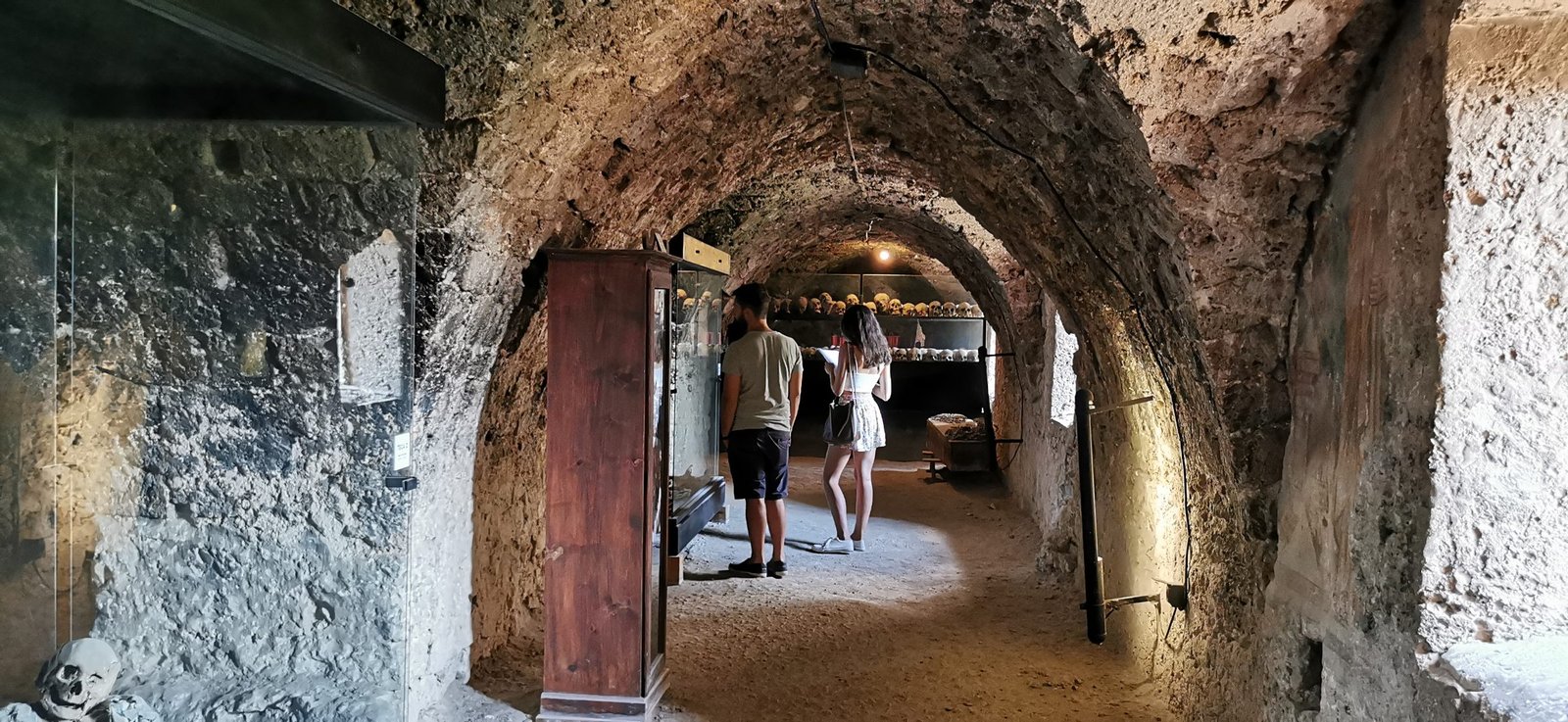
In the crypt beneath the church of Santo Stefano in Ferentillo, the dead didn’t decay. A quirk of the soil’s microorganisms and the crypt’s ventilation naturally mummified the bodies buried there – and when Napoleonic-era edicts forced exhumations from 1805, the villagers found their ancestors leathery, whole, and in some cases still recognisable. Today around two dozen of them stand in glass cases in what is, by some distance, Italy’s strangest small museum.
What you actually see
The crypt of Santo Stefano – the lower, older church beneath the 16th-century upper one, in Ferentillo’s Precetto district – holds roughly 24 naturally mummified bodies of men, women and children, along with mummified heads, hundreds of skulls, and two mummified birds used in early studies of the phenomenon (Vivi Terni; Ministry of Culture listing). The cast includes figures local lore has named and storied – a Chinese bride who died on her Italian honeymoon (now presented with a hologram, since a 2024 multimedia upgrade added audioguides in English and AI reconstructions), victims of violence, a hanged man. Scientists have studied the crypt since 1871; the bodies mummified naturally, without embalming, which is precisely what makes the place scientifically interesting rather than merely gothic.
The visit, practically
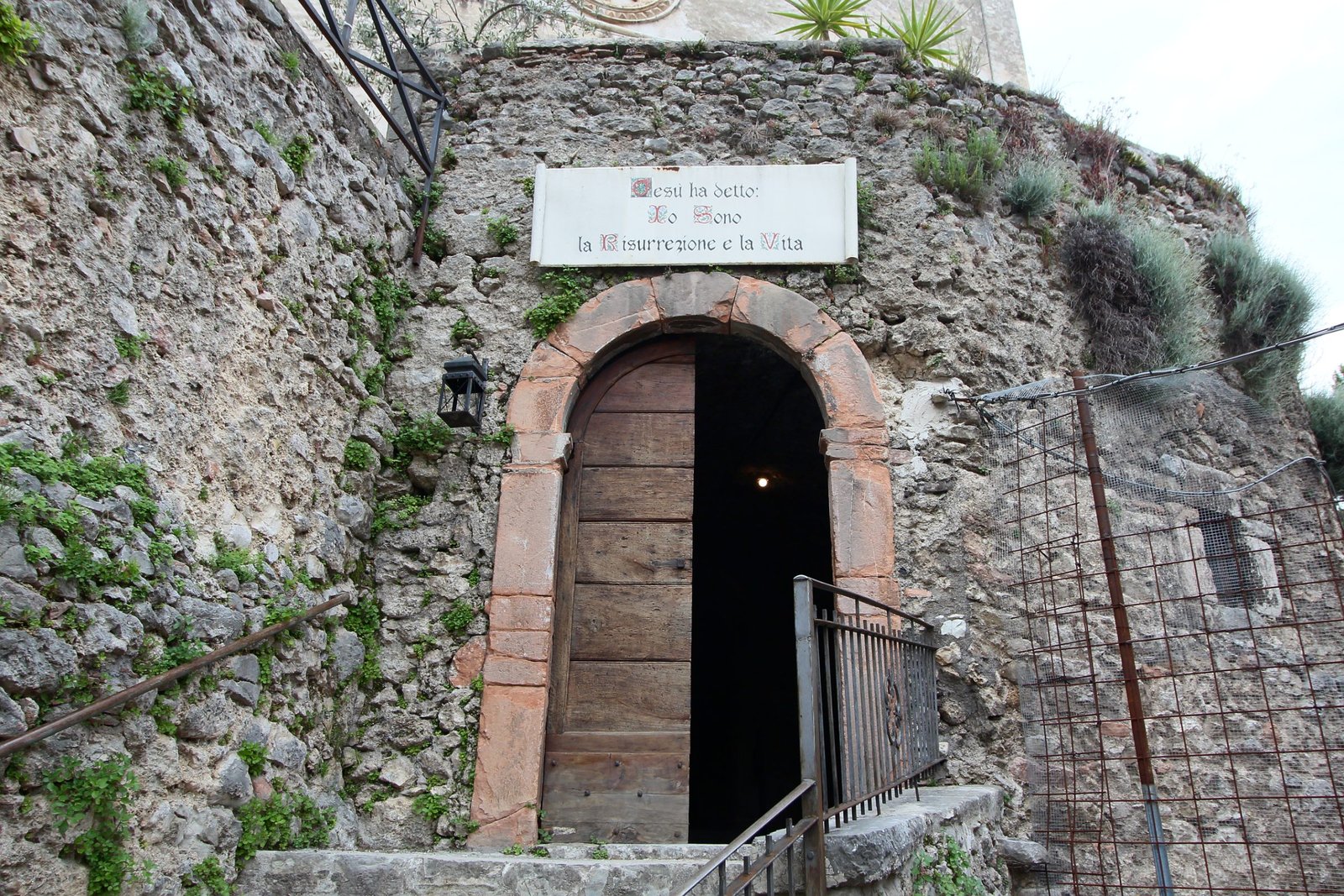
- Where: Church of Santo Stefano, Precetto (lower Ferentillo), Via della Rocca – 15 minutes from the falls.
- Hours & price: the museum publishes its opening times year-round, and they are the same every day of the week. Open daily: 1 Apr–30 Sep 10:00–13:00 / 15:00–19:00; 1–31 Oct 10:00–13:00 / 15:00–18:00; 1 Nov–28 Feb 10:00–13:00 / 15:00–17:00; 1–31 Mar 10:00–13:00 / 15:00–18:00. Last entry 15 minutes before closing. (Weekends-only winter opening applies to the abbey of San Pietro in Valle, not to the museum — the two are often confused.) No ticket price is published online; reported figures range from about €3 to €6. Call before you go: +39 328 686 4226 or +39 335 654 3008, or email info@mummiediferentillo.it.
- Duration: 30–45 minutes.
- Booking: not required for individuals per the ministry listing.
- Official site: mummiediferentillo.it – sparse — it publishes its hours only as images and no price at all — so the phone is the reliable channel for cost.
Should you bring the kids?
The perennial question, honestly answered: morbidly curious ten-year-olds tend to rate it the best thing in Umbria; sensitive six-year-olds may be haunted for a week. These are real human remains, presented respectfully but unmistakably – calibrate to your own child, and see the family guide for the wider day.
Make it a Ferentillo half-day
The mummies take under an hour, which is exactly right before the valley’s best lunch: Piermarini is five minutes away (book), the climbing walls hang over the village for the post-lunch spectacle, and the abbey of San Pietro in Valle is just upstream. The full village picture: Ferentillo guide.
Frequently asked questions
Are the Ferentillo mummies real?
Yes – naturally mummified human remains from the crypt’s former cemetery, preserved by soil microorganisms and ventilation, studied scientifically since 1871. Nothing was embalmed.
How much does it cost?
The museum publishes no price online, and reported figures range from about €3 to €6 — so treat any single number you see elsewhere, including ours, as unconfirmed. Call +39 328 686 4226 or +39 335 654 3008 before you go.
Is photography allowed?
The policy is posted at the door and it’s worth asking at the desk – this is the kind of place where asking first is the right instinct anyway.