

Lake Piediluco
Lake Piediluco – the lake below the falls
Lake Piediluco is the afternoon most Marmore Falls visitors never have, and it’s five to ten minutes’ drive from the falls’ upper entrance. A fjord-like lake wrapped in wooded hills, a single lakefront village under a ruined fortress, fish restaurants on the water, and – because this is Italy’s national rowing centre – dawn crews sculling through the mist. If the falls are the spectacle, the lake is the exhale.
Facts checked: October 2026 · Written by James – the lake is our 15-minute escape from the village above the falls.
Lake Piediluco at a glance
Most visitors do the falls and drive home. The lake is the afternoon they miss — ten minutes up the road, and where we actually spend our summer.
The essentials
- What it is: Umbria’s second-largest natural lake – a relic of the ancient Lacus Velinus, about 13 km of shoreline at 375 m altitude (Umbria tourism board).
- Swimming: yes – at four authorised bathing points in 2026, season 1 May to 30 September (now closed; the 2027 ordinance is usually issued in spring), with the lake rated “excellent” quality this year. The full picture: where to swim.
- On the water: a lake tour boat from the Miralago beach (adults €8), pedalo/canoe hire, and sport fishing with a regional licence – boats and watersports.
- Eating: lakefront tables doing roast coregone and the fishermen’s carbonaretti – where to eat.
- The event: the Festa delle Acque – illuminated boat parades and fireworks on the water, in 2026 held across late July and the first weekend of August, with 2027 dates usually out in spring – festival guide.
- The view: from Labro, the car-free stone village stacked above the far shore – the best sunset in the area.
Where Lake Piediluco is
The lake sits at the southern tip of Umbria, in the comune of Terni, right on the border with Lazio, squeezed between Monte Luco and Monte Caperno. After Trasimeno it’s the largest lake in the region, but it’s compact: just 1.52 km², with a long, wriggling shoreline and a maximum depth of around 20 metres near the village (Comune di Terni). The ancient Lacus Velinus it’s a remnant of once reached as far as the cliffs at Marmore, which is why the lake and the falls are still part of the same water system today.
Thinking of staying the night? Our guide to where to stay at Lake Piediluco lists the hotels, rooms and B&Bs on the lake.
The lake was a regular stop on the Grand Tour: Richard Lassels, Goethe and Lord Byron all wrote about it, and the French painter Corot came back to it in several of his paintings (Umbria Tourism).
The village
Piediluco is essentially one long lakefront street. Above it stands the Rocca Albornoz, built 1364–1368 for the papal cardinal of that name on the older Castello di Luco – be aware it’s a ruin reached by a footpath, worth the climb for the views but not a furnished castle to tour (Vivi Terni). At the village’s heart is the church of San Francesco, opened to the faithful in 1338, a Franciscan sanctuary on the Via di Francesco with 16th-century frescoes (details). Across the water rises Monte Caperno, the echo mountain – tradition says it returns a full eleven syllables, and locals test it with a line of verse (the story). We cover the walk and what to shout in the echo guide.

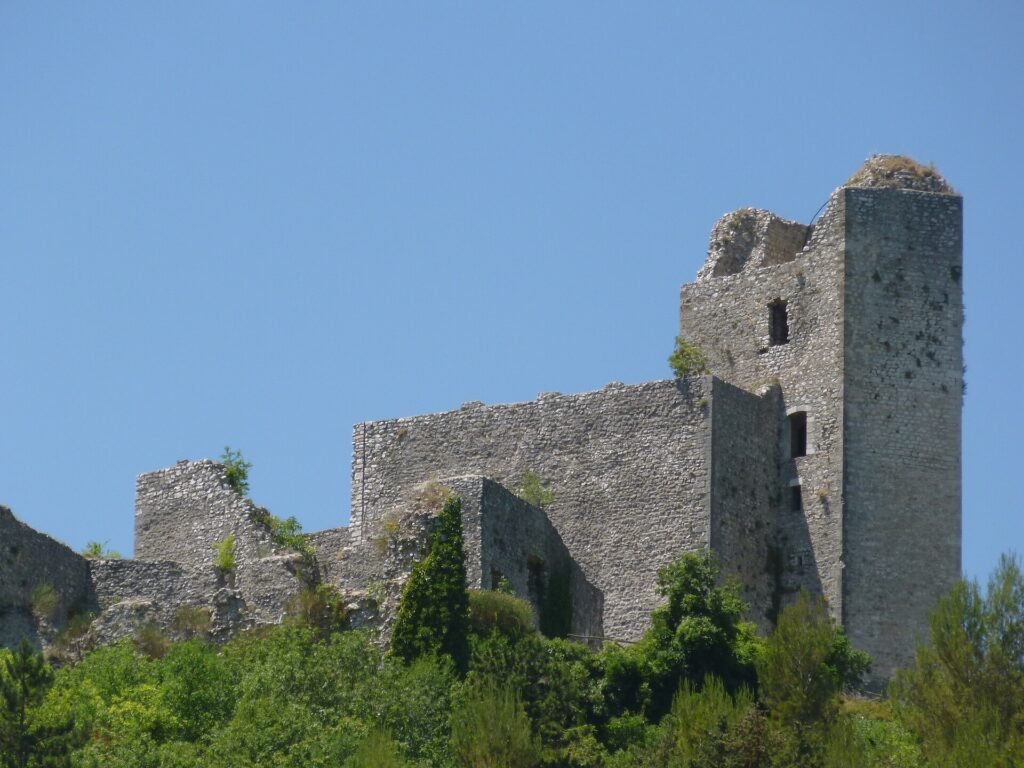
The Rocca’s most unusual feature is its pentagonal keep, built on five levels, the lowest of which served as a water reservoir. That linear layout sets it apart from the other Albornoz fortresses in Umbria, which are all quadrangular (Vivi Terni).
The rowing lake
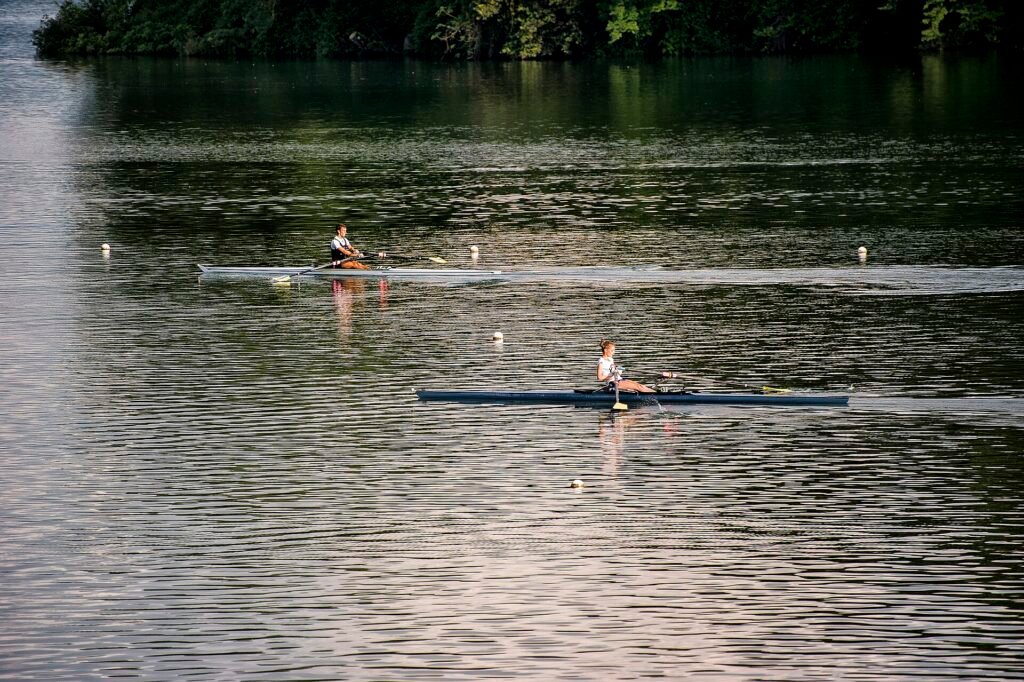
Piediluco is the Italian Rowing Federation’s national training centre – chosen for its lack of wind and current and its straight 2,200 m stretch of water, raced over 2,000 m on eight lanes – and each April it hosts the international Memorial Paolo d’Aloja regatta; the 40th edition ran 24–26 April 2026 with around 20 nations (official regatta page). Regatta weekends are a genuinely good free spectacle: national crews at full tilt, lakefront bars busy, spring light on the water.
When to come
Summer for swimming, boats and the festival – with the honest caveat that August weekends fill the village and parking is tight (there’s a ZTL in the centre; arrive before late morning or expect a walk). April–June and September are the local’s choice: warm, uncrowded, everything open. Winter the lake turns quiet and reflective – a walk-and-lunch destination rather than a beach one.
Getting here
From the falls’ upper entrance (Belvedere Superiore, Marmore village) it’s 5–10 minutes by car; from Collestatte about 15. Carless: the E624 BusItalia line runs Terni–Marmore–Piediluco (winter 2026–27 timetable in force from 14 September; check the PDF for times – it’s a local service, not a shuttle).
Stay with us
The villa, above the falls
Palazzetto Manassei — our Art Nouveau villa on the Collestatte piazza. Three bedrooms, a terrace over the gorge, and Marmore Falls a ten-minute walk downhill.
Local experiences
Guided experiences nearby
Two local operators run guided days on the lake, from a boat tour with a walk up to the falls to a boat-and-canoe day starting at the HYDRA museum in Marmore.
Prices and availability are shown live on GetYourGuide.
Bookings made through GetYourGuide earn this site a small commission. You pay the same price as booking on GetYourGuide directly.
Frequently asked questions
Is Lake Piediluco worth visiting?
If you’re at Marmore Falls, emphatically – it’s the natural second half of the day, ten minutes away, and it’s where locals actually spend their summer afternoons.
Can you swim in Lake Piediluco?
Yes – at four authorised points in the 2026 season (1 May–30 September, now closed; the 2027 ordinance usually follows in spring), with water officially rated excellent this year. Details and which beach suits whom: swimming guide.
How long do you need?
A half day covers a swim or boat trip plus a long fish lunch. Add the Labro sunset and it’s a full, slow afternoon-into-evening – our favourite shape for it.
Where is Lake Piediluco?
In the comune of Terni at the southern tip of Umbria, on the border with Lazio, a few minutes’ drive from Marmore Falls. It’s Umbria’s second-largest lake after Trasimeno.
Southern Umbria Hidden Gems
A printable map of the corners of the Valnerina most visitors walk straight past — ghost hamlets, an abbey in the woods, and more.
- 14 hand-picked spots with a numbered map
- How to string them into a day
- The quiet places locals love