
The Valnerina
Facts checked: July 2026. Full disclosure before a word of this: we own a house here. Judge the bias accordingly – we think the village survives it.
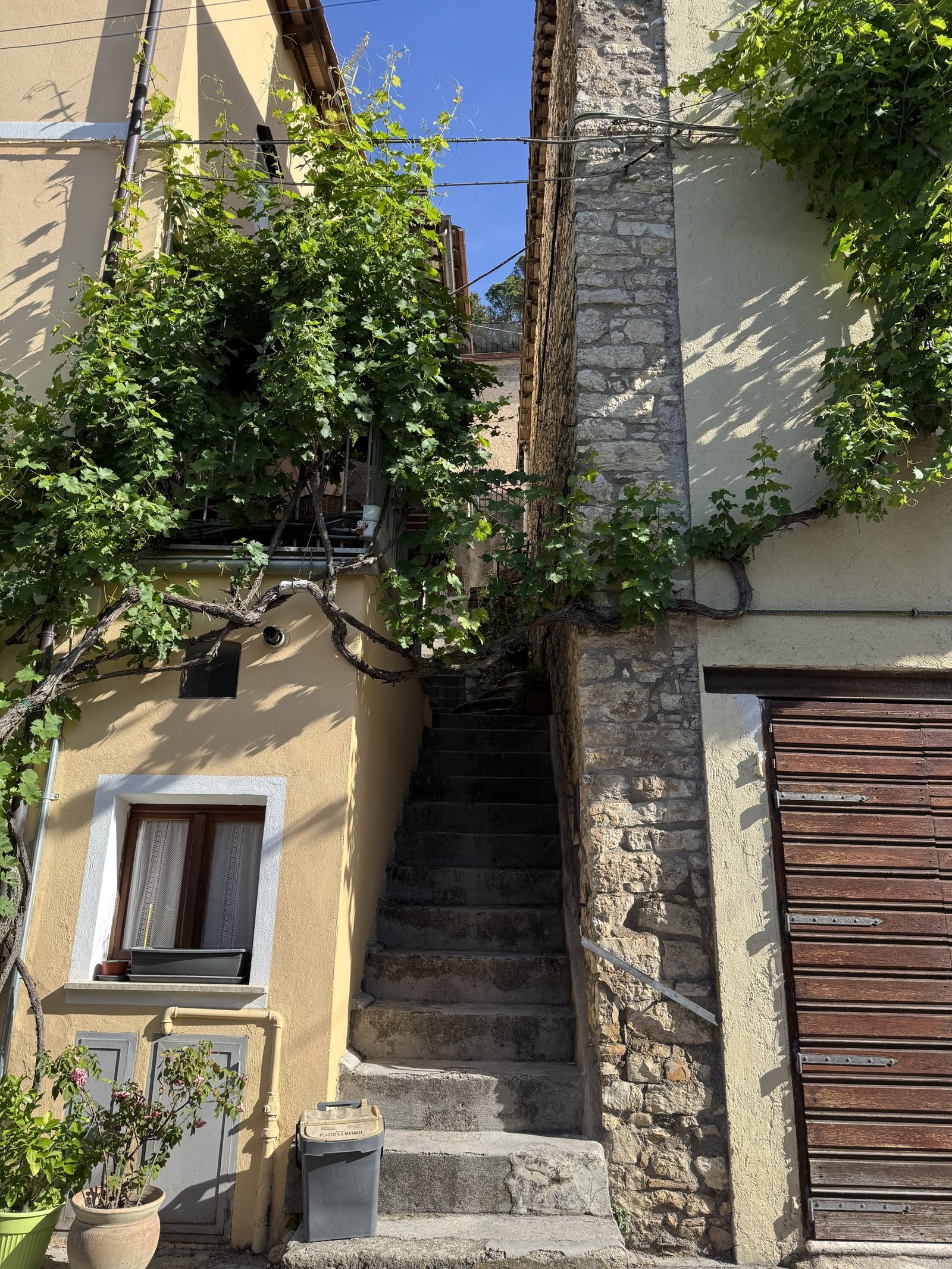
Collestatte is the stone hamlet stacked on its hill directly above Marmore Falls – close enough that on still nights you can hear the release. It’s not a sight in the coach-tour sense: no museum, no ticket office, one osteria at the foot of the hill. It is, however, the real thing – a medieval castrum that’s been watching the waterfall for a thousand years – and it’s where this whole website is written.
A short history
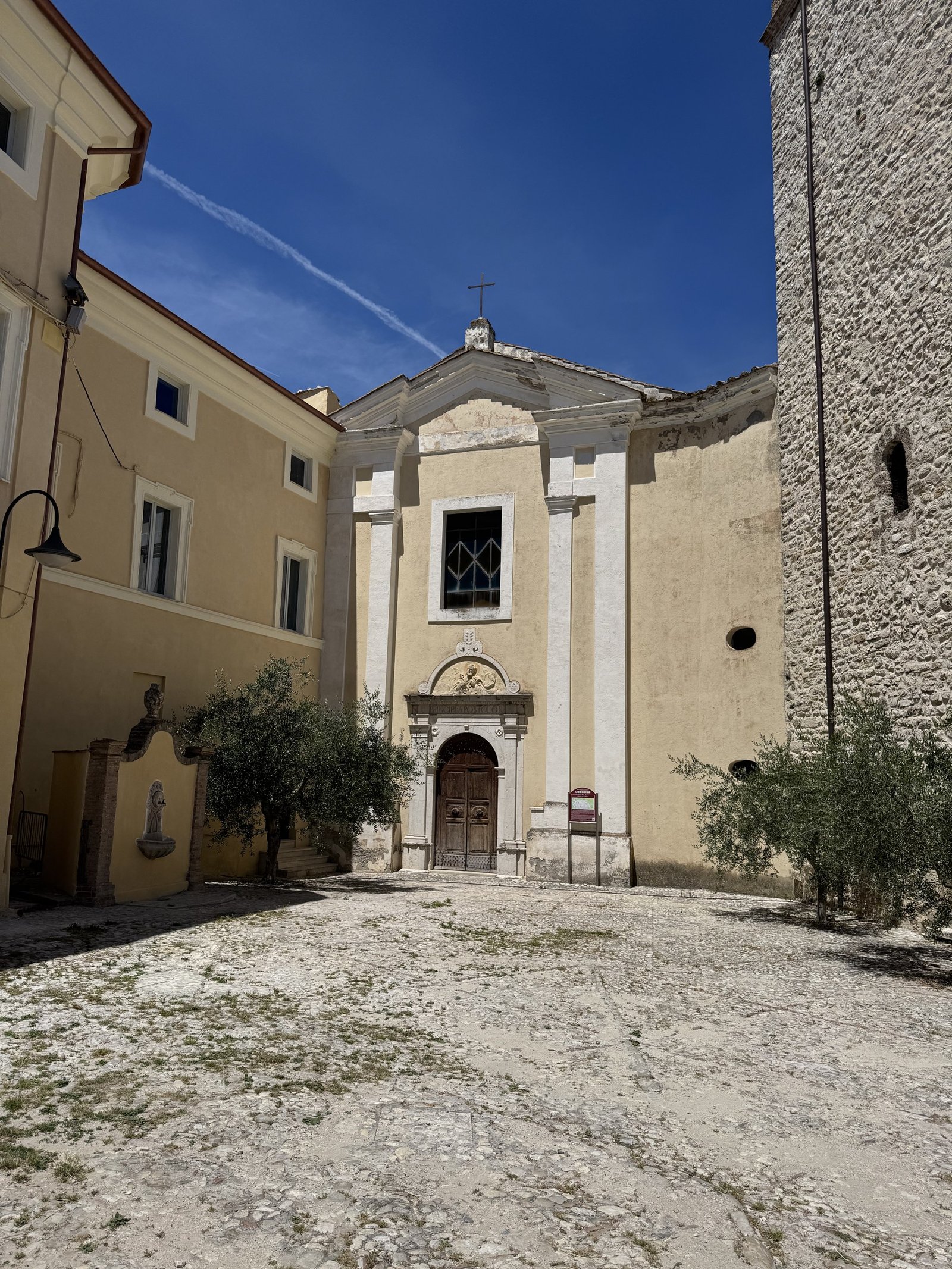
The village is first documented in 1090 as Colle Stacti, a possession of the Duchy of Spoleto, grown up around a watchtower whose base survives as the church bell tower (Comune di Terni). Local histories add a darker chapter: an 11th-century castle destroyed by forces in the pay of the Abbot of Farfa – the survivors of which, tradition says, founded neighbouring Torre Orsina. By the late 13th century the Orsini held the village; then, from the 1660s, came the Manassei – one of Terni’s great noble families, magistrates of Florence, Orvieto and Todi, who took feudal rights over Collestatte and Torre Orsina and, in the eighteenth century, reshaped the heart of the village: they laid out Piazza San Pietro, built their palazzo against the church, and raised a pair of matching houses opposite, each with the family arms – a lion beneath fleurs-de-lis – carved in stone above the door. The carvings are still there; look up as you cross the square. The village shared its fortunes with Torre Orsina until 1627, and both were folded into the Comune di Terni in 1927.
The church of San Pietro itself is of very ancient origin – pre-11th century – with a 16th-century altarpiece and a baptismal font of the same era carved with the Orsini coat of arms: three families’ worth of village history in one small square.
The Manassei, and the twin palaces on the square
The family who shaped the Collestatte you walk through today were the Manassei – one of Terni’s oldest noble houses, whose name still sits above the doorways on Piazza San Pietro. When they took feudal rights over Collestatte and Torre Orsina from the 1660s, they remade the upper village around the church: they built the larger Palazzo Manassei against the flank of San Pietro and raised opposite it a pair of matching smaller houses – the palazzetti gemelli, the “twin little palaces” – each carrying the family arms, a lion beneath fleurs-de-lis, carved in stone above the door. The Comune di Terni still lists Palazzo Manassei and the twin palaces among the village’s landmarks.
The Manassei were more than landlords. The same family built the grander Palazzo Manassei in Terni – begun in the 1420s by the magistrate Cipriano Manassei, later the city’s art gallery (1964-1986) and restored again in recent years. Their best-remembered descendant, Count Paolano Luigi Giuseppe Manassei (1837-1920) – recalled as “the lord of Collestatte and Torreorsina” – was an entrepreneur, politician and writer who carried the name into the modern era. The family’s papers survive in the Italian state archive record (SIUSA – Manassei, famiglia).
So when you cross Piazza San Pietro and look up at the carved coats of arms, you are reading three centuries of one family’s mark on this hillside – and, as it happens, the reason this website carries the name it does.
The two Collestattes
There’s the upper village – the old castrum at 351 m, lanes converging on Piazza San Pietro, terraces looking across the Nera gorge – and Collestatte Piano down on the valley road, which is where the falls’ lower entrance, the car parks and most of the eating actually are. Visitors usually see Piano and never climb; the fifteen minutes up the hill buy you the view and the silence.
Eating and practicalities
- Osteria La Cascata (Collestatte Piano, on the SS209): the closest quality table to the falls – proper Umbrian osteria cooking; book on summer weekends.
- Favorito dal 1945 Bistrò (Collestatte Piano): the interesting one – a fully gluten-free and lactose-free kitchen 800 m from the falls, which for coeliac travellers makes it a destination in itself.
- Il Pavone d’Oro (Collestatte Piano): traditional and panoramic; reviews run mixed on service – the nearest option rather than the best (judge for yourself).
- No shops in the upper village – the locals’ pattern is Arrone (Thursday market, everyday needs, 10 minutes) or the Terni supermarkets on the way home. Plan accordingly.
What to actually do here
Walk the lanes at golden hour; find the terrace views over the gorge; walk down to the falls’ lower entrance (you’re above Europe’s tallest man-made waterfall – the full guide); and use the village as it’s best used: as a base. The whole lower Valnerina unrolls from the front door, the lake is 15 minutes, and Rome is 90 – which is, in the end, exactly why we bought here.
Frequently asked questions
Can you walk from Collestatte to Marmore Falls?
Yes – the lower entrance at Collestatte Piano is walkable from the village; fit guests do it on foot and get driven back up. The climb home is the price of the view.
Is there anywhere to stay in Collestatte?
A handful of holiday lets, ours among them – an Art Nouveau villa with three bedrooms, a terrace over the gorge and a hot tub: details here. (Declared bias, as promised.)