
Plan Your Trip

Facts checked: July 2026. Built around the falls’ water timetable – the planning trick every other Umbria itinerary misses.
Here’s a strange fact we verified before writing this: most “one week in Umbria” itineraries that rank on Google skip this corner entirely – no falls, no lake, no Valnerina. They route you Perugia–Assisi–Orvieto and call it done. This is the other week: southern Umbria done properly, from one base, with Europe’s tallest man-made waterfall as the anchor and the famous hill towns as day trips rather than hotel changes.
The week at a glance
| Day | The shape | The anchor |
|---|---|---|
| 1 | Arrive · falls at the afternoon release · village dinner | The switch-on moment |
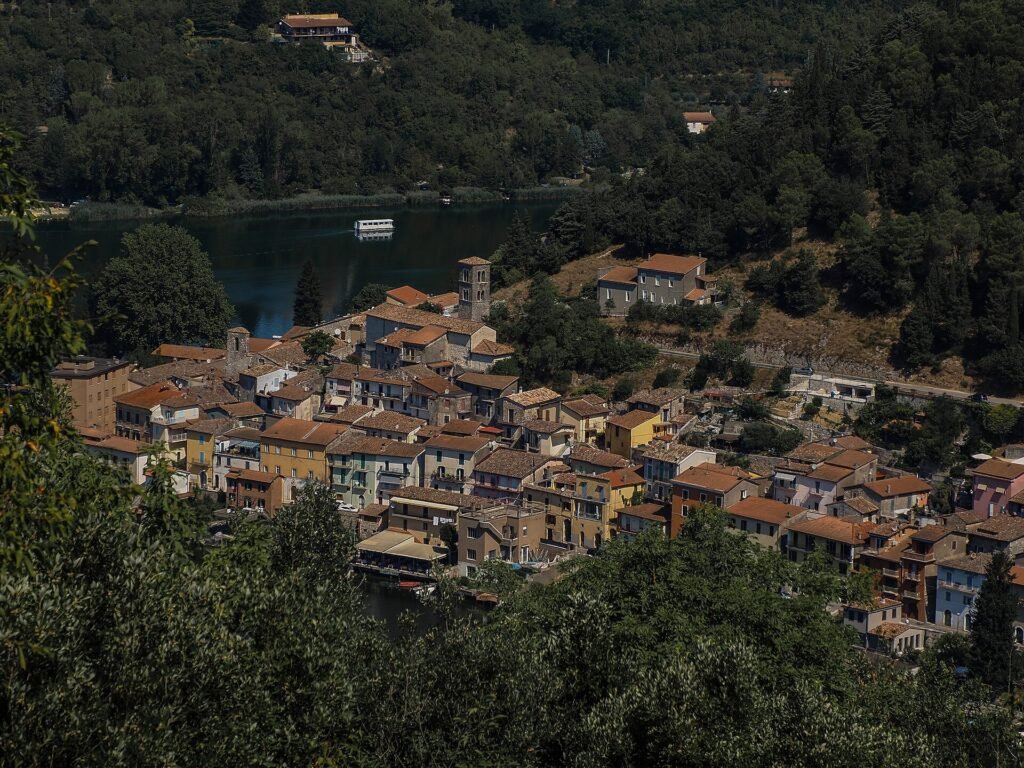
| 2 | Lake Piediluco · lakefront lunch · Labro sunset | The exhale |
| 3 | The Valnerina: river/e-bikes · mummies · abbey | Piermarini truffle lunch |
| 4 | Spoleto (or Narni underground – weekends, plus weekdays in summer) | Ponte delle Torri |
| 5 | By appetite: adventure / family / Roman / wine | Your pick |
| 6 | The icon day: Castelluccio in bloom OR Assisi/Orvieto | The long drive that’s worth it |
| 7 | The slow day: market, echo, lake beach, farewell dinner | Doing nothing, well |
Days 1–5
Run as the five-day plan – which itself builds on the weekend and three-day pages. Every element there is drafted from pages we’ve verified: the falls, the lake, the valley, Spoleto, Narni.
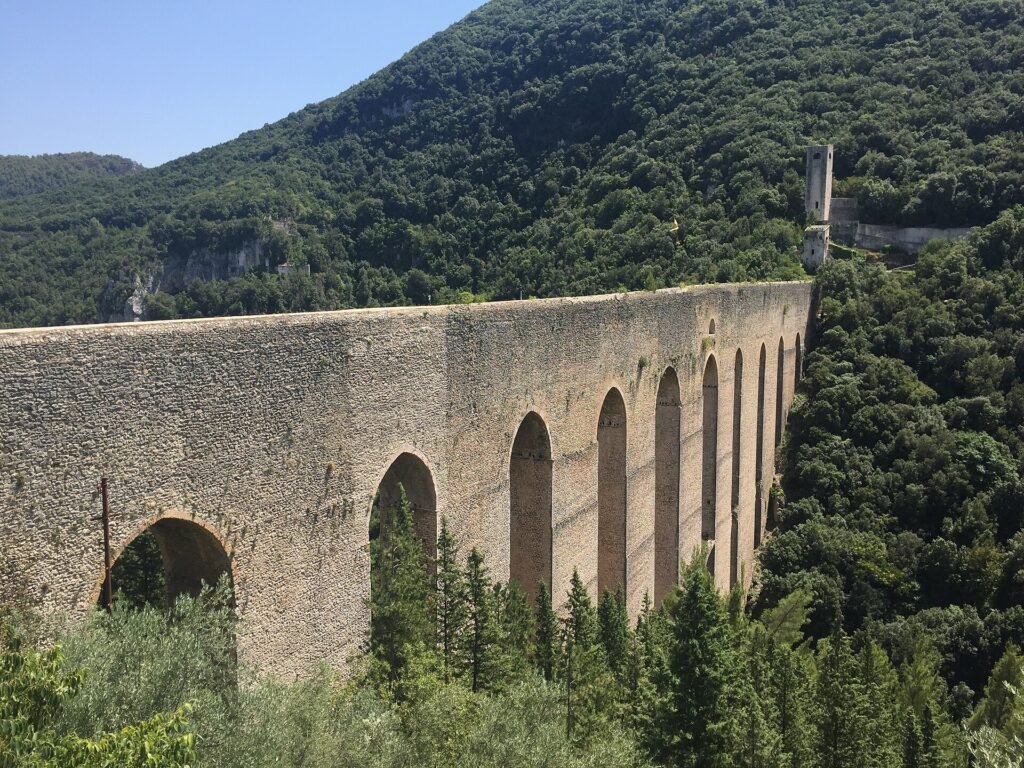
Spoleto’s Ponte delle Torri stands on nine piers joined by pointed arches, about 230 metres long and 80 metres high, and its two central piers are hollow, with rooms inside that seem to have served as guard posts (italia.it).
Day 6 — the icon day
- Mid-June to mid-July: Castelluccio di Norcia – the lentil bloom across the Piano Grande is one of Italy’s genuinely iconic landscapes, ~1h45 each way through the upper Valnerina. Go early, expect weekend shuttle arrangements in peak bloom, lunch on lentils in the village.
- Any other week: Assisi or Orvieto (~1h15 each). Assisi for the Giotto cycle and the Basilica of St Francis; Orvieto for the striped Duomo. First-timers in Italy should take this day; returners can happily swap it for a second slow day.

If you’d rather not drive on the icon day, Trenitalia sells combined tickets for both towns: Assisi Link (train plus bus up to the town) and Orvieto Link (train plus the funicular up to the centre) (Trenitalia).
Day 7 — the slow day (do not skip it)
The mistake week-long itineraries make is ending on a march. End on a village morning instead: Arrone’s Thursday market if the day aligns (otherwise cornetti at Bar All’Isola anyway), the Monte Caperno echo – shout a hendecasyllable at a mountain, get it back – a last swim or lounger hour at the lake, and a farewell dinner worth the name: Piermarini if you didn’t already, Le Terrazze on the water, or the full rankings. If it’s summer, the illuminated evening release is the natural last scene.
The honest notes
- A car is essential – all week, every day (the transport truth).
- Book ahead: the Balcony slot, Piermarini, Narni Sotterranea (phone booking only), festival-period beds, and August everything. The calendar flags your collisions.
- When to come: June for bloom + evening releases; September for peak weather minus the crowds; February for the St Valentine season; August only with early starts and lake afternoons.
- Budget markers: falls €12 + balcony €3.50 pp; boat €8; mummies ~€6; abbey church free (weekends only mid-October to March); Carsulae free with the combined falls ticket (same price – choose it when you buy). The week’s real spend is the table, as it should be.
Frequently asked questions
Is one week too long for southern Umbria?
No – this plan fills seven days without repeating itself or padding. What it deliberately isn’t is a two-bases week: everything above runs from one villa, unpacked once.
Can this itinerary work without a car?
Honestly, no – only a reduced version (falls, Narni, Spoleto by rail) survives carless: what’s genuinely doable by train.
Which day gets dropped for a 6-day week?
Day 5. The core (1–3), the hill town (4), the icon (6) and the slow finish (7) are the skeleton.