
History & Heritage
The industrial story
Everyone visits Marmore Falls. Almost no one is told that the reason it switches on and off is sitting ten minutes downstream: Terni, the steel city that industrialised this valley and took the waterfall for power. It’s the least romantic chapter of the area’s history and, for anyone curious about how the place actually works, the most interesting.
Facts checked: July 2026. This is the chapter no one tells visitors – and it’s the one that explains why the waterfall has an on/off switch.
Why Terni became “the Manchester of Italy”
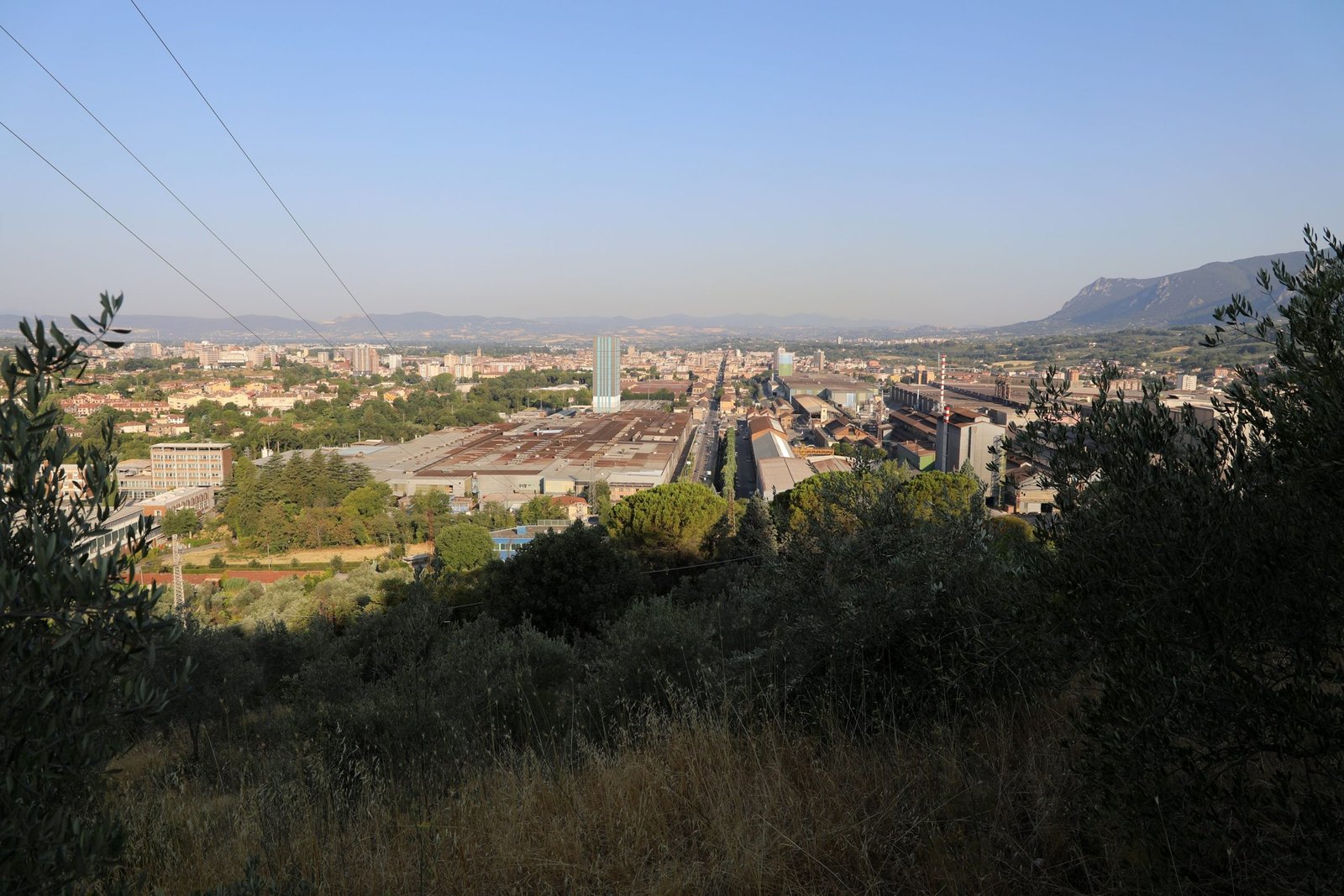
On 10 March 1884 the Società degli Alti Forni, Fonderie ed Acciaierie di Terni (SAFFAT) was founded by the Venetian entrepreneur Vincenzo Stefano Breda (company history). Terni had two things heavy industry wanted: abundant falling water for power, and an inland location away from the coast. It became an arms-and-steel town, producing high-quality steel for armaments – armour plate and heavy gun steel – and grew so fast it earned the nickname the “Manchester of Italy”. That industrial DNA is why central Terni looks more 20th-century than the hill towns around it: it was heavily built up, bombed in the war, and rebuilt.
The falls’ off-switch, explained
Here’s the part that matters to your visit. From the 1920s the company built the hydroelectric system that still governs the Velino: a mobile dam controlling the river’s flow, Lake Piediluco used as a reservoir, and the Galleto power station (opened 1929) turning the drop into electricity (per the company history). Because that water is worth more as power than as spectacle, the flow over Marmore is diverted for generation and released for tourists on a schedule – which is exactly why there’s a timetable to check. The waterfall you photograph is the surplus the turbines don’t need at that hour. This month’s release times →
Papigno — chemicals, then cinema
Just outside Terni, the village of Papigno had a large chemical/carbide works tied to the same industrial water economy. In the late 1990s and 2000s its sheds were converted into film studios: Roberto Benigni used the Papigno studios for productions including Pinocchio (2002), and the site is associated with his La vita è bella / The Tiger and the Snow work. The studios later fell into disrepair. It’s an unusually cinematic footnote to a chemicals plant.
CAOS — art in the old chemical works
Terni’s most rewarding cultural stop reuses another piece of the industrial city: CAOS (Centro Arti Opificio Siri), the arts centre built inside a former chemical factory, holding the city art museum, the archaeological museum and exhibition spaces – open Thursday–Sunday, €5 (€3.50 reduced) on a combined ticket (hours & tickets; more on our Terni page) – the archaeological museum is also where the votive bronzes from the Monte Torre Maggiore temple are displayed.
What you can actually see
You don’t tour the working steelworks, but the industrial story is legible: the scale of central Terni, the Galleto plant and the dam system on the way up to Piediluco, Papigno on the falls road, and CAOS in the old Siri works. Pair it with the falls for the full “how this landscape is engineered” day.
Frequently asked questions
Why does Marmore Falls turn on and off?
Because its water is used for hydroelectric power. A system built by the Terni steel company from the 1920s (dam, Lake Piediluco reservoir, the 1929 Galleto plant) diverts the river Velino for generation and releases it over the falls on a published schedule.
Was any film shot near Terni?
Yes – the former industrial site at Papigno was converted into film studios used by Roberto Benigni, including for Pinocchio (2002). We’re verifying the precise details of other productions before stating them.