
History & Heritage
What Rome built here
Rome left three things in this corner of Umbria that you can still stand on: a road, a town, and a waterfall. The road is the Via Flaminia; the town is Carsulae, now an open archaeological park; and the waterfall is Marmore, which the Romans created as a piece of drainage engineering. One unhurried day covers all three.
Facts checked: July 2026. Carsulae is 25-30 minutes from us; we send guests who like ruins-with-nobody-in-them, and it delivers.
Carsulae — the town the road left behind
Carsulae grew up along the western branch of the Via Flaminia, the consular road Rome pushed north toward the Adriatic (the Flaminia was built from 220-219 BC; the site shows sylvan-pastoral traces back to the 9th century BC and became a proper city from the 6th century BC, per umbriatourism.it). When the road’s traffic shifted to the eastern branch, the town slowly emptied – which is why it survives as fields-and-stones rather than a modern city, and why it’s sometimes called a “little Pompeii of Umbria”.
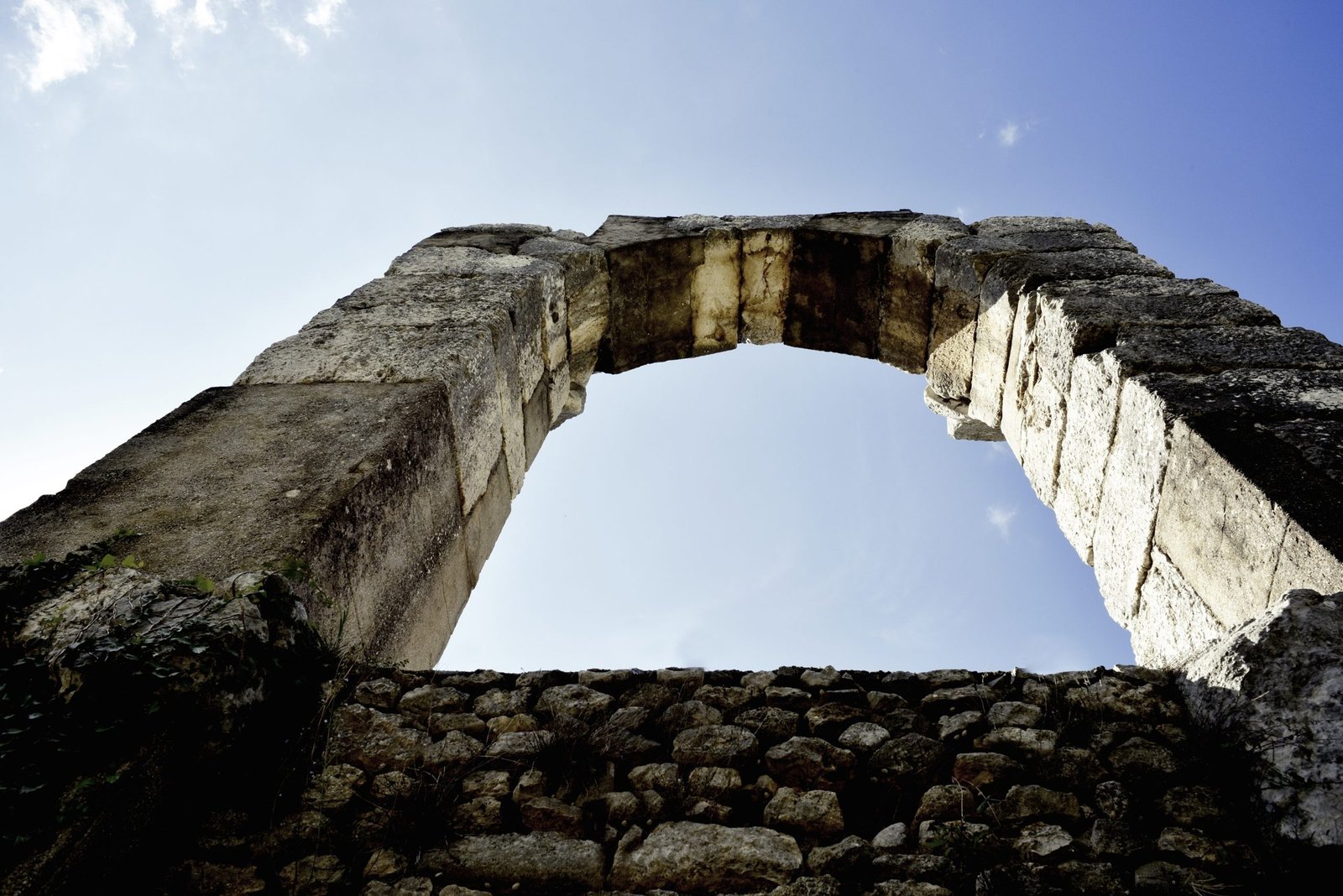
What you walk through: the cardo maximus (the paved Flaminia itself, drainage channels and all, ran straight through the centre), the forum with basilica and curia, the twin temples known as the Templi Gemini (whose deities are still unidentified), a theatre and amphitheatre (the latter held several thousand spectators), and the Arch of San Damiano, the old northern gate. The 6th-century church of Santi Cosma e Damiano was built directly on a Roman structure, reusing its columns.
Practicalities: the archaeological area is open Tuesday–Sunday 8:30–19:30 (closed Mondays; last entry 30 minutes before closing), with a visitor centre and Antiquarium at the entrance (verified via the Direzione Musei Umbria). Tickets are sold through the official site, carsulae.info; check the current price there before you travel. It’s flat, open and good for children who need to run.
The Via Flaminia — why the road runs where it does
The Flaminia threaded the natural corridor between the Apennine ridges, linking Rome to Narnia (Narni) and on toward Fano and the Adriatic. Narni still has its Roman river crossing: the Ponte d’Augusto (c. 27 BC), one huge 30-metre arch surviving of the four that once carried the road – the ruin Corot painted in 1826. More on Roman Narnia →
The falls as Roman engineering
The most Roman thing here isn’t a building – it’s the waterfall. In 271 BC the consul Manius Curius Dentatus cut the Cavo Curiano to drain the stagnant Rieti basin by sending the river Velino over the Marmore cliff into the Nera gorge. That trench created the drop you visit today; later centuries re-cut it (notably a Renaissance intervention) to fix the flooding and silting it caused downstream. The full engineering story of the falls →
One Roman day from the falls
Morning at Carsulae before the heat; drive down to Narni for the Ponte d’Augusto and lunch in the old town; afternoon release at Marmore to see the Roman drainage scheme doing its thing. All three sit within about 30 minutes of each other.
Frequently asked questions
Is Carsulae worth visiting?
If you like archaeology without crowds, yes – it’s an open, walkable Roman town on the original Via Flaminia, rarely busy. Confirm current opening hours and the ticket price before travelling, as we haven’t re-verified them for 2026.
Did the Romans really build Marmore Falls?
Yes – the drop exists because Manius Curius Dentatus cut a drainage trench (the Cavo Curiano) in 271 BC to empty the Rieti plain into the Nera. It has been modified several times since.