
Towns & Day Trips
Narni – the real Narnia
Narni is the hill town that lent its name to Narnia – literally: C.S. Lewis found it in an atlas of ancient Italy and underlined it. With Greta Gerwig’s Narnia: The Magician’s Nephew arriving in cinemas on 12 February 2027 (and on Netflix from 2 April 2027 – the widely reported November 2026 date was scrapped in May), the name is about to get very famous again. Here’s the real town behind it – which needs no film to justify the trip.
Facts checked: July 2026 – including the film dates, which most articles have wrong (it moved). Narni is 30 minutes from us; we go for the underground tour and stay for dinner.
The Narnia story, done properly
Rome conquered the Umbrian settlement of Nequinum in 299 BC and refounded it as Narnia, a strongpoint on the Via Flaminia named after the river Nar – today’s Nera, the same river that runs under our waterfall (Turismo Narni). Some two thousand years later, a young C.S. Lewis – studying classics around 1914–17 – underlined “Narnia” in Murray’s atlas of the ancient world, apparently just liking the sound of it. The source is his biographer and secretary Walter Hooper, who in 2009 presented the town with a copy of the very atlas plate, underscoring and all (L’Italo-Americano tells it well). So no, the wardrobe isn’t here – but the name genuinely is.
Narni Sotterranea — the underground tour (book it)
The best thing in town is under it. In 1979 a group of young cavers broke through a hole in a wall beneath the former Dominican convent and found a frescoed 12th-century rock church nobody had entered in centuries. The guided circuit now runs through that church (Santa Maria della Rupe), a Roman cistern, the Inquisition’s “Sala dei Tormenti” tribunal room, and a prison cell covered in the coded masonic-alchemical graffiti of Giuseppe Andrea Lombardini, held there in 1759–60 – scratched into the plaster with pottery shards (official site).
The 2026 practicalities (checked against the official FAQ): tours run Saturdays, Sundays and holidays, 10:00 to 17:30, departures every half hour, roughly 1–1.5 hours. Tickets €8 (children 6–11 €5, under-6 free). Booking is mandatory and by phone only – +39 339 1041645 – they explicitly don’t take email or WhatsApp bookings. English speakers get a free audioguide via QR code; English guided tours exist only for groups of 20+. (If you’ve read about an “English tour on Fridays”, that’s out of date.)
The rest of the town
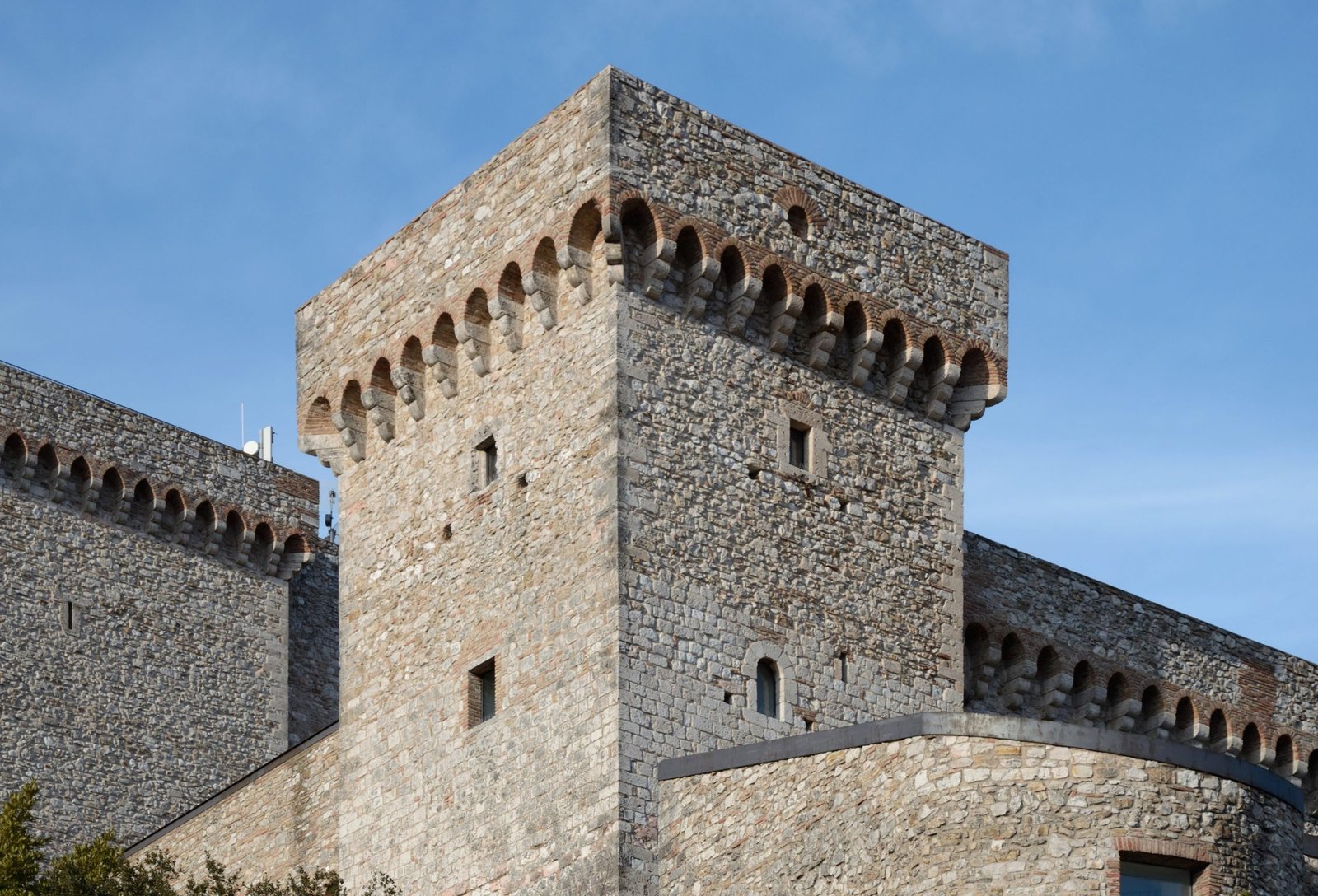
- Rocca Albornoziana: the cardinal’s fortress above town (built 1367–78), open Tue–Sun 10:00–19:00 in summer (10:00–17:00 Nov–Mar) – the €9 “Narnia Pass” covers it plus Palazzo Eroli (details).
- Palazzo Eroli: the town museum, whose star is a Domenico Ghirlandaio Coronation of the Virgin – plus a Benozzo Gozzoli and, improbably, an Egyptian mummy (details).
- Ponte d’Augusto: the ruined Roman bridge (c. 27 BC) below town – one 30-metre arch survives of the four that carried the Via Flaminia. Corot painted it in 1826 (it hangs in the Louvre); Turner sketched it first. View it from the path off the Flaminia or from Via dei Tre Ponti below (where exactly).
- The medieval core: Piazza dei Priori on the old Roman forum, the loggia attributed to Gattapone, and the cathedral of San Giovenale (consecrated 1145, over the tomb of the town’s 4th-century first bishop).
Corsa all’Anello — three weeks of the Middle Ages
Narni’s great festival runs from the last week of April to the second Sunday of May – documented in the town statutes of 1371 and revived in 1969. The three terzieri (Mezule, Fraporta, Santa Maria) open costume workshops and medieval taverns, and it all builds to knights at full gallop spearing a suspended ring with a lance. The 58th edition ran 23 April–10 May 2026; dates and programme each year at corsallanello.it. Eating in a terziere tavern during the festival is one of Umbria’s great evenings – and the town books out, which is where being 30 minutes away helps.
Eating
Three reliable addresses in the historic centre, all verified operating this year: La Gallina Liberata (Vicolo Belvedere 13 – homemade pasta and charcuterie, book: 349 2543515, closed Mondays), Il Gattamelata (Via Pozzo della Comunità 4 – solid Umbrian cooking, gluten-free friendly), and L’Osteria del Fondaco (Via del Campanile 2 – osteria-enoteca, ~€29 a head, bookable on TheFork).
Getting there and parking
From the falls/Collestatte it’s about 30 minutes by car; from Terni 12–15. The old town sits high – park at the Suffragio car park (Via del Suffragio 185, 24h) and take the lifts up to Via Garibaldi (official directions). By train, “Narni-Amelia” station is down in Narni Scalo on the Rome–Ancona line – a bus or taxi ride from the hilltop, so drive if you can.
Frequently asked questions
Is Narnia a real place?
Yes – Narni, Umbria, founded as Roman Narnia in 299 BC. C.S. Lewis found the name in an atlas of ancient Italy and underlined it; his secretary Walter Hooper documented the story and brought the atlas plate to the town in 2009.
When is the new Narnia film out?
Greta Gerwig’s Narnia: The Magician’s Nephew opens in IMAX and cinemas worldwide on 12 February 2027 and streams on Netflix from 2 April 2027 – delayed from the originally announced November 2026 (Netflix’s official page).
Do you need to book Narni Sotterranea?
Yes – phone only (+39 339 1041645), tours Saturdays, Sundays and holidays. €8, about an hour to ninety minutes, English audioguide included via QR code.
Is Narni worth visiting?
For the underground tour alone, yes – add the Rocca, the Ghirlandaio and lunch and it’s one of the best half-days within 30 minutes of the falls.