
The Valnerina
Facts checked: July 2026. The abbey is five minutes past Ferentillo, folded into the valley’s quietest side – we send everyone who cares about art, and half of them call it the best thing they saw in Umbria.
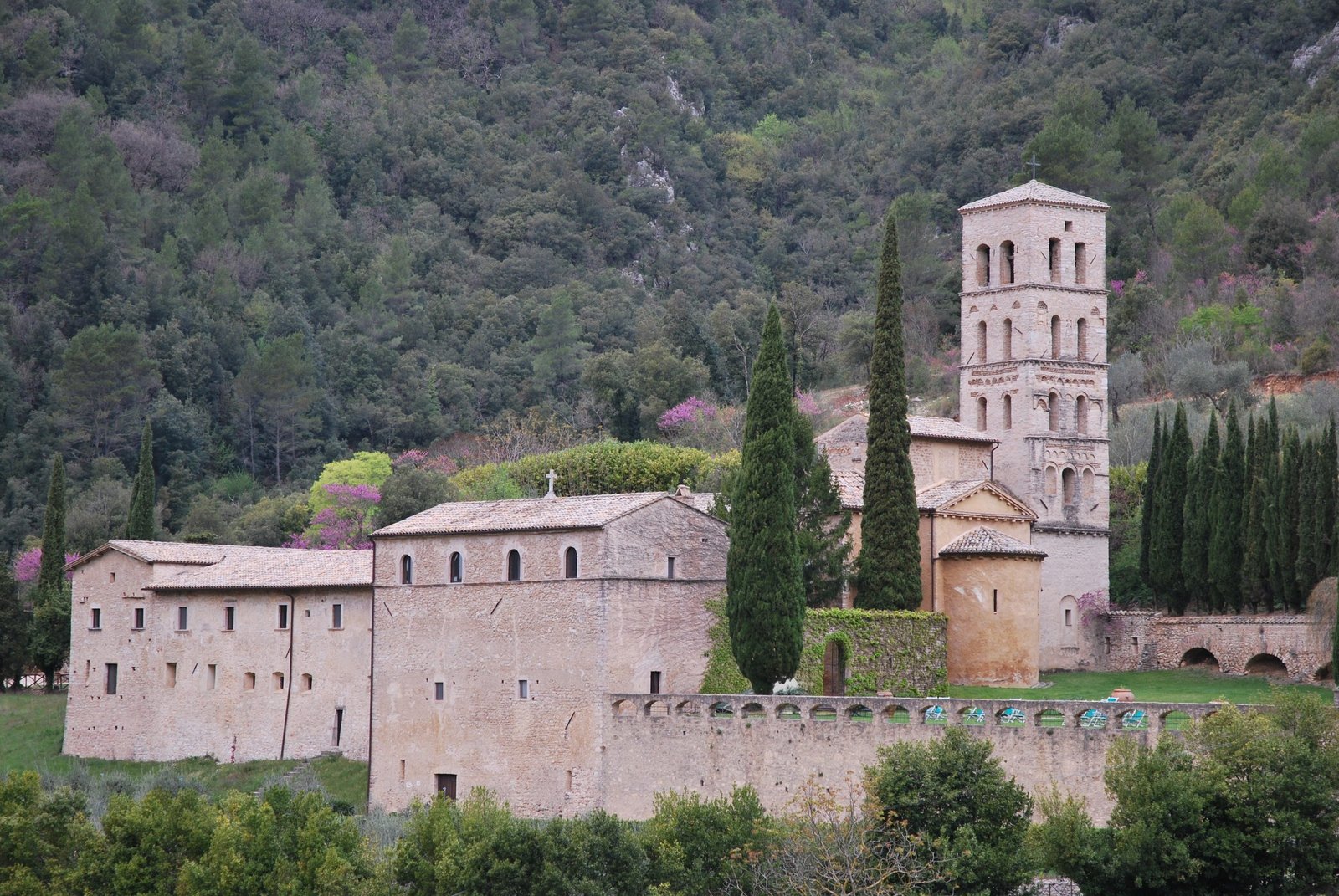
San Pietro in Valle is an 8th-century abbey founded by Faroaldo II, Lombard Duke of Spoleto – who, the story goes, dreamt of St Peter, built the monastery on the spot, and eventually took the habit and died in it. Twelve centuries later it holds two of the valley’s treasures: a carved Lombard altar frontal signed by its sculptor, and a Romanesque fresco cycle that art historians treat as a milestone on the road to Giotto.
What you’re looking at
- The fresco cycle (c. 1150): Old and New Testament scenes down the nave walls – Roman-school painting a full century before Cavallini and Giotto took the same road; this is one of the places Italian art learnt to tell stories on walls (Visit Ferentillo’s guide).
- The Ursus altar frontal (739–742): a Lombard marble screen carved under Duke Ilderico and – rarest of things for the age – signed: “Ursus magester fecit”. Eighth-century sculpture with an artist’s name attached.
- Roman sarcophagi (2nd–4th century), reused for the abbey’s medieval burials – the valley’s habit of recycling its past, in marble.
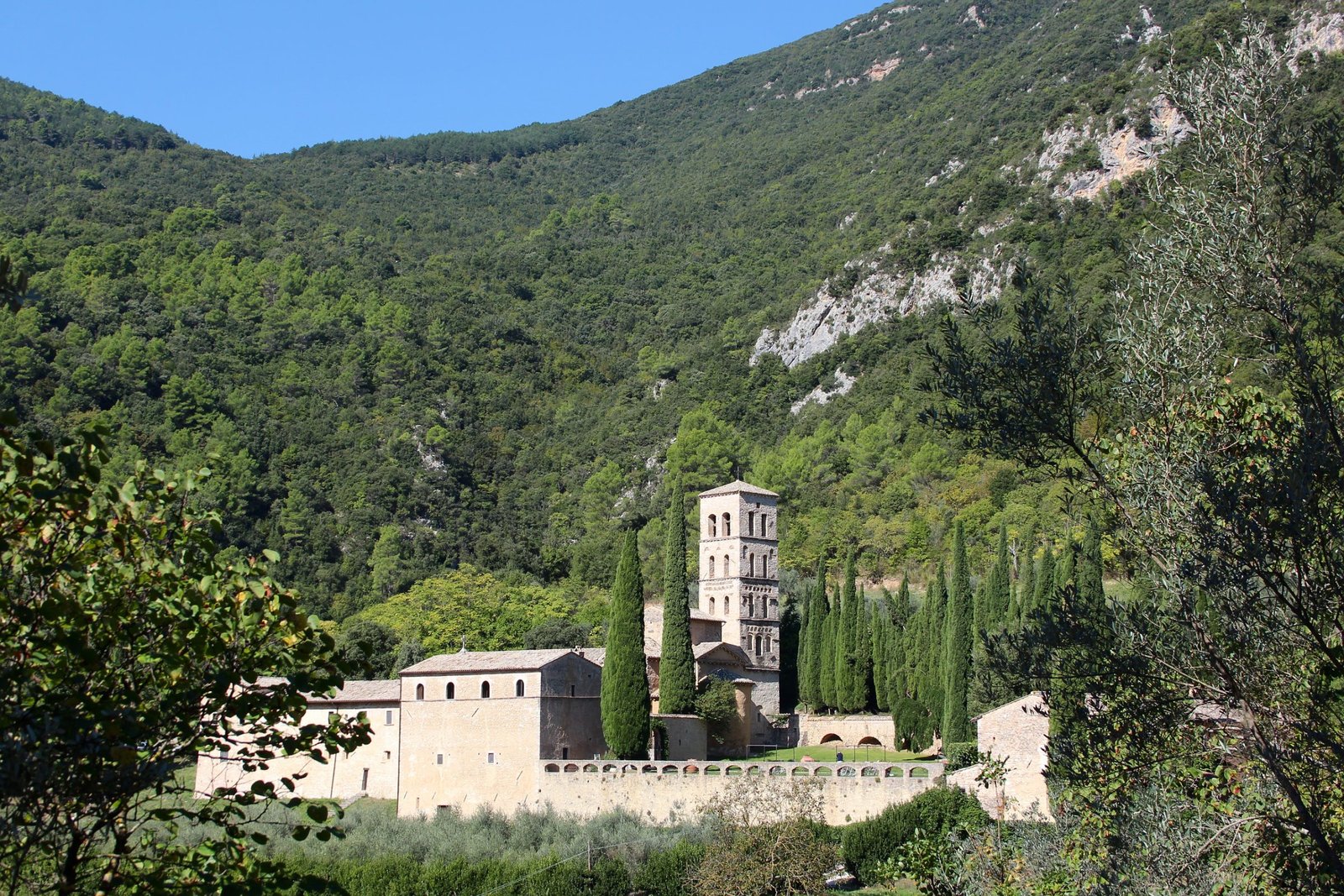
- The setting: the abbey sits alone against the wooded flank of the valley – the approach itself is worth the detour.
Visiting — how it actually works
Two institutions share the site. The church and cloister are open to visitors, on the timetable the abbey publishes alongside the Ferentillo museum, and it is not the same all year: 1 Apr–30 Sep daily 10:00–13:00 / 15:00–18:00; 1–15 Oct daily 10:00–13:00 / 15:00–17:00; 16 Oct–28 Feb and 1–31 Mar, Saturdays and Sundays only, 10:00–13:00 / 15:00–16:30 (to 17:00 in March). Last entry 15 minutes before closing, and it is still worth phoning (+39 328 686 4226 or +39 335 654 3008) before a long detour. The monastery buildings have been privately held since 1917 and operate as a four-star country house hotel, the Residenza d’Epoca Abbazia San Pietro in Valle, with a restaurant – which means you can sleep in a Lombard abbey, or at least take lunch in one after the frescoes – book, and check the restaurant is serving non-residents that day.
Fitting it in
Five minutes upstream of Ferentillo, which sets the obvious pairing: mummies, truffle lunch, abbey – the valley’s macabre-to-sublime hat-trick. Photographers: late light on the tower, and the view back down the valley from the abbey terrace.
Frequently asked questions
Can you visit San Pietro in Valle?
Yes – the church and cloister are open to visitors (the monastery wing is a hotel). Note the season: daily from 1 April to 15 October, but Saturdays and Sundays only from 16 October to the end of March. It closes over lunch either way, so don’t arrive at 14:00 expecting open doors.
Why does it matter?
Because of what survives: a signed Lombard sculpture from the 740s and a complete Romanesque fresco cycle from about 1150 – the kind of continuity you normally need a city cathedral to see, in a valley abbey with no queue.