
The Valnerina
Facts checked: July 2026. Vallo di Nera is the far end of our patch – 35 minutes up the valley, and the village we describe to guests as “what the Middle Ages actually looked like”.
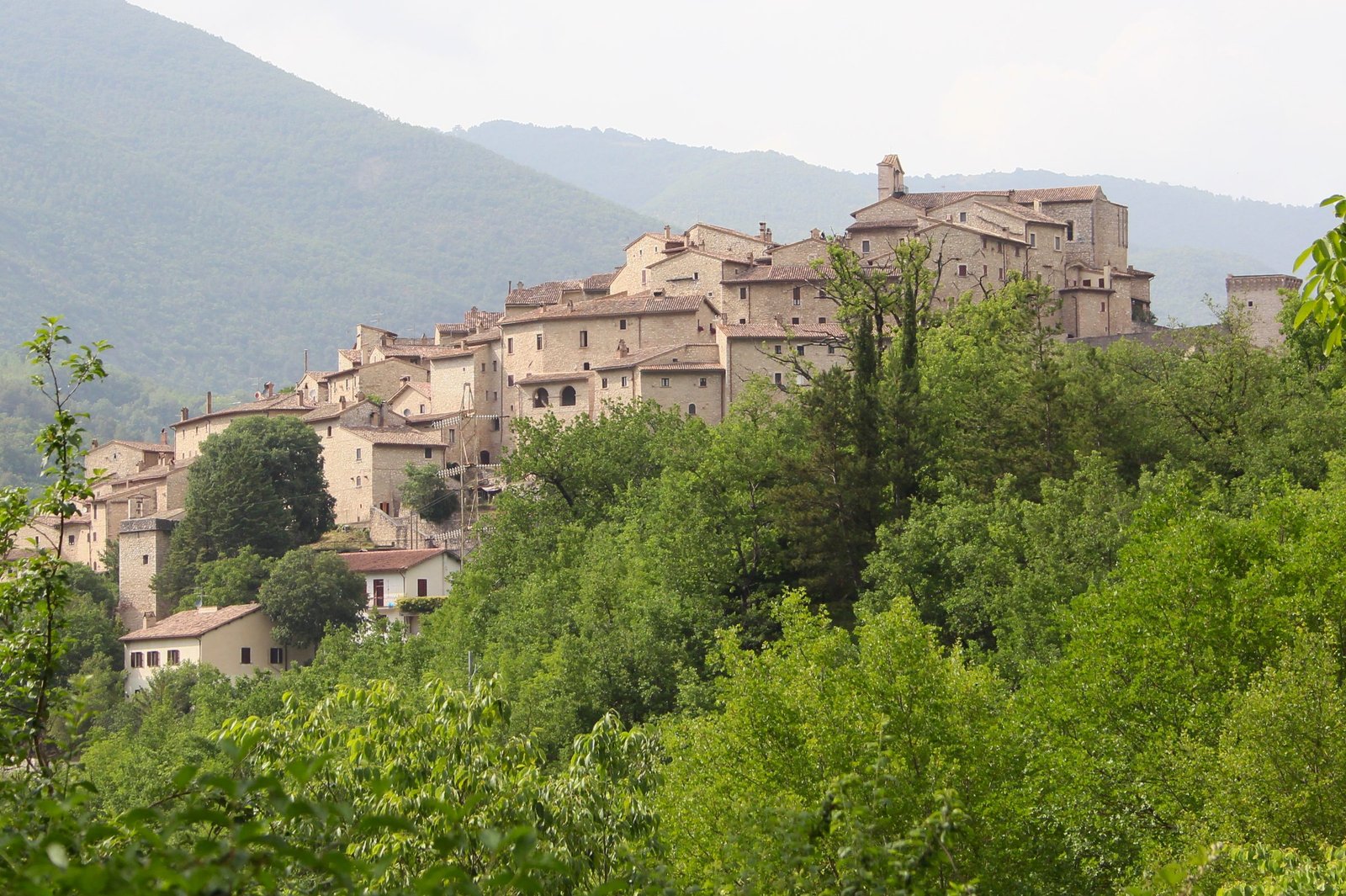
Vallo di Nera is the best-preserved castrum in the Valnerina: a fortified spiral of stone laid out in 1217, still wrapped in its walls, still pedestrian, still almost entirely without crowds. It’s a certified Borghi più Belli d’Italia member with a population of barely three hundred – and it holds, for its size, a startling amount of serious fresco painting.
The village as artefact
The plan is the sight: concentric lanes coiling up the hill, houses forming the defensive wall itself, arched passageways, towers – the 13th-century military logic intact because nothing much happened here afterwards to break it. Cars stay outside; you walk in through the gates and the century falls away. Thirty unhurried minutes covers the spiral; photographers will take longer.
The frescoes
Two churches carry the village’s weight of art (the association’s borgo page is the best summary):
- Santa Maria (begun 1273): Giotto-school frescoes, including Cola di Pietro’s 1401 cycle – the famous scene shows the procession of the Bianchi penitents, a snapshot of medieval popular religion mid-march.
- San Giovanni Battista (up at the summit): Jacopo Siculo’s 1536 Dormition of the Virgin, the village’s Renaissance headline.
Opening for both churches is informal, as it usually is in a borgo this size – ask in the village if you find them locked.
Practicalities
35 minutes from the falls up the valley road, past Scheggino; pair the two, since you’re passing anyway. Eating in the village is limited and seasonal; the safe plan is lunch at Scheggino or Ferentillo. Come in soft light – the stone goes honey-coloured late in the day – and in autumn, when the woods around the walls turn.
Frequently asked questions
Is Vallo di Nera worth the drive?
If you care about medieval Italy at all, yes – it’s the most intact castrum in the valley and among the most atmospheric small villages in Umbria, with none of the crowds that description usually implies.